
The best lion's mane grow kit for most beginners is a pre-colonised fruiting block or bag kit from a reputable supplier like North Spore (US), GroCycle, or Marvellous Mushrooms (UK). You open the box, cut a small slit in the bag, mist it twice a day, keep it at room temperature, and you can expect to see pins within 7 to 15 days and a harvestable flush within two weeks of that. That's genuinely it. The kits do the hard work because the substrate is already fully colonised with lion's mane mycelium before it ships to you.
Best Lion’s Mane Grow Kit: UK Setup Guide + Steps

Marcus Thornfield
26 Apr 2026
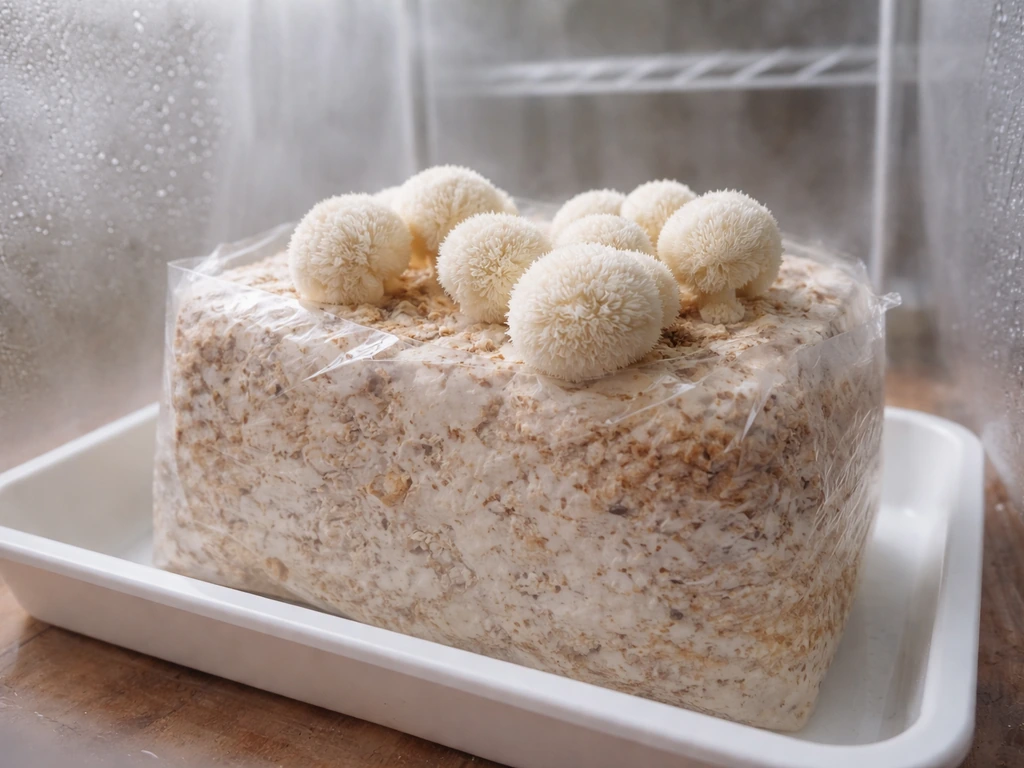
How to pick the best lion's mane grow kit for your space and goals
The single biggest decision is whether you want a box-style spray-and-grow kit or a bare fruiting block. Box kits (like GroCycle's or Marvellous Mushrooms') come with the growing box built in as a mini humidity chamber, which is great if you live somewhere dry or can't commit to building a humidity tent. Bare fruiting blocks (like North Spore's) give you more control and usually better yields, but you'll need to manage humidity yourself, either with a dedicated fruiting chamber or a simple DIY humidity tent made from a large plastic bag poked with holes.
Beyond that, think about three things: your indoor temperature, how much time you want to spend on it each day, and whether you want multiple harvests. Lion's mane is one of the more forgiving species but it does like cooler conditions than most people expect. If your home runs warm in summer (above 24°C / 75°F consistently), look for a kit where the instructions clearly address that, or plan to grow it in a cooler room. If you want multiple flushes (two or three is realistic), choose a kit that walks you through the re-fruiting process with dunking or soaking instructions.
| Kit / Brand | Format | Best for | Flushes | Where to buy |
|---|---|---|---|---|
| North Spore Spray & Grow | Box with fruiting block | US beginners who want simplicity | 2–3 | North Spore website |
| North Spore Fruiting Block | Bare colonised block | More experienced growers wanting higher yields | 2–3 | North Spore website |
| GroCycle Lion's Mane Kit | Box with grow bag window | UK beginners, compact spaces | 2+ | GroCycle website |
| Marvellous Mushrooms (UK) | Box kit with instructions | UK beginners, room-temperature growing | 2+ | Marvellous Mushrooms website |
| MycoCultures Kit | Colonised bag | Intermediate growers comfortable with incisions | 3+ | MycoCultures website |
If you're just getting started with mushroom grow kits in general, lion's mane is a great species to begin with because you can clearly see what healthy growth looks like (white, fluffy, and pom-pom shaped) and problems are usually obvious before they ruin a whole flush. If you're looking specifically for a beginner grow kit, lion's mane is a great way to learn the core humidity, airflow, and temperature basics without guesswork. It pairs well with beginner grow kit guidance since the core concepts (humidity, airflow, temperature) carry across species. A great place to start is with the best grow your own kits for beginners so you can learn the process step by step.
UK-focused checklist: what to look for when buying in the UK
If you're in the UK, the good news is you have solid domestic options so you don't need to import from the US and risk the block drying out or getting held at customs. GroCycle (Devon-based) and Marvellous Mushrooms are both UK suppliers with kits designed around typical British home conditions. That matters because UK room temperatures in autumn and winter often fall right into lion's mane's sweet spot (16–22°C), meaning you don't need extra equipment.
Here's what to specifically check before you buy or when your kit arrives:
- Shipping time: lion's mane blocks are living organisms. Choose a UK supplier so the block arrives within 1–3 days, not a week. If it ships from abroad, ask whether it's been refrigerated.
- Temperature compatibility: UK kits like Marvellous Mushrooms' specify 16–24°C, which matches most UK living rooms year-round. Avoid growing in a conservatory in summer (too warm) or an unheated garage in winter (too cold).
- Instruction format: UK-based kits tend to use Celsius and metric measurements throughout. Watch for US kits that use Fahrenheit and imperial, which can cause confusion at the setup stage.
- Contamination guarantee: look for a supplier that offers a replacement policy if the block arrives contaminated. North Spore offers replacements within 30 days of receipt; check whether your UK supplier has something equivalent.
- Humidity management advice: UK homes are often draughty and central heating dries the air out fast in winter. Check the kit comes with humidity tent guidance or a built-in box to compensate.
- Filter patch or gas exchange: kits should have a filter patch on the bag or a breathable section to allow CO2 to escape. A sealed bag with no filter will stall growth.
- Substrate type: UK kits typically use hardwood sawdust or supplemented straw. Both work well for lion's mane. Avoid anything that doesn't specify sterilised substrate, as lion's mane is particularly sensitive to contamination without sterilisation.
Unboxing and kit inventory: what you should have and what to check first
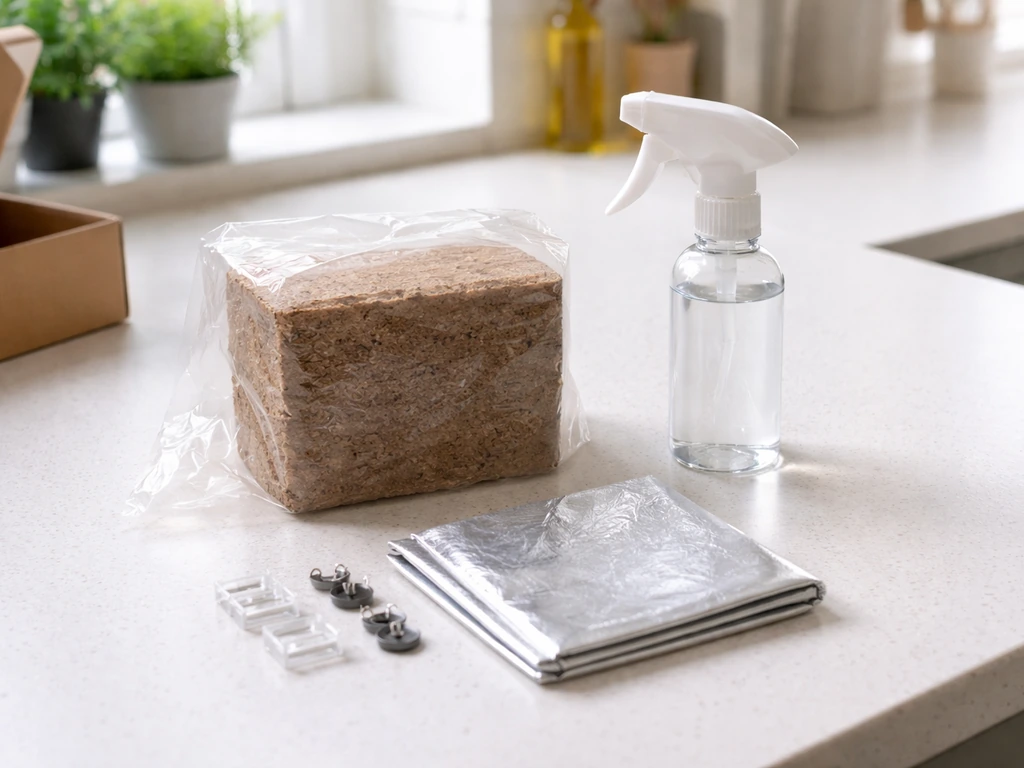
The moment your kit arrives, open the outer packaging and check the block or bag immediately. Don't leave it sealed in a hot car or a warm hallway. Here's what you should find in the box and what each thing tells you about the kit's health.
- The grow bag or block: should feel firm and dense, not squishy or hollow. The mycelium (the white or off-white mass inside) should be uniform and smell earthy or mushroom-like, never sour, ammonia-like, or rotten.
- Filter patch: a small patch on the side or top of the bag that looks like microporous tape. This is your gas exchange point. Make sure it isn't blocked, wet, or torn.
- Growing box or tray (box kits): should be clean, dry, and flat. Check the window cut-out or viewing panel if there is one, as this is where mushrooms will grow.
- Instruction sheet: every kit should include one. If yours didn't come with clear instructions, check the supplier's website for a PDF. UK brands like Marvellous Mushrooms publish versioned instruction PDFs (look for the latest version number on the sheet).
- Spray bottle (some kits): not always included, but essential. If yours didn't come with one, grab a clean plastic spray bottle before you start.
Contamination check: healthy lion's mane mycelium is white or slightly cream coloured. If you see green, black, pink, or orange patches anywhere on the block, that is contamination (usually mould) and the kit should not be used. Contact your supplier immediately. Green patches are almost always Trichoderma, a common competitor mould, and it will outcompete your mushroom if you try to grow through it.
If you can't start the kit right away, you can refrigerate most blocks for up to 6 months (per North Spore's guidance). Just keep it in its sealed bag, don't freeze it, and bring it back to room temperature for a few hours before you begin.
Lion's mane grow kit instructions: step-by-step from setup to fruiting
The exact steps vary slightly by brand but the underlying sequence is the same across all reputable kits. If you want to sanity check another brand’s sequence, wholecelium grow kit instructions are a related option to compare timing for cutting, misting, and fruiting. After you set up your lion's mane kit, use these mondo grow kit instructions to make sure you follow the right timing for cutting, misting, and fruiting. If you want to compare common setups and timings, these mycelium grow kit instructions can help you plan your next grow step by step. If you want detailed specifics for a Zamnesia mushroom grow kit, follow the kit’s included instructions for cutting, misting, and fruiting timelines zamnesia mushroom grow kit instructions. Here's a clear, consolidated walkthrough that maps onto GroCycle, Marvellous Mushrooms, North Spore, and MycoCultures kits. I'll call out brand-specific differences where they matter.
Step 1: cut your opening
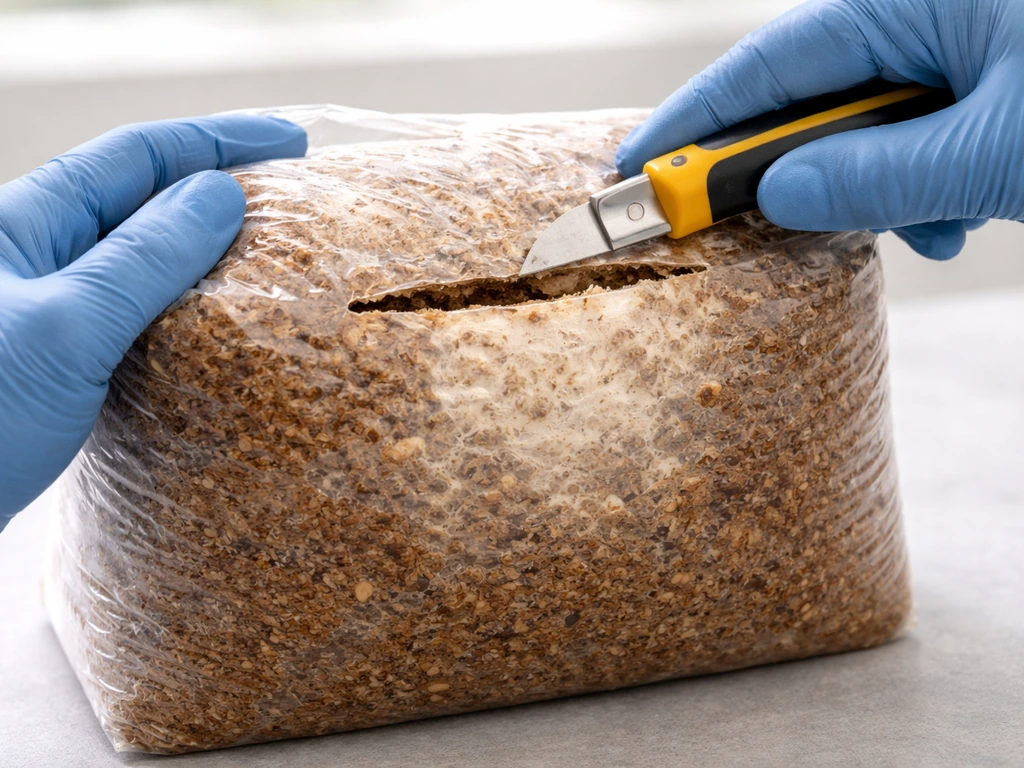
Every kit has a specific cutting instruction and getting this wrong is the most common first mistake. GroCycle kits: cut a 5–10 cm horizontal slit toward the top of the window area on the bag, then fold the top of the bag down inside the box so mushrooms are directed out through the window. North Spore fruiting blocks: unfold the top of the bag, check the filter patch is clear, then make a small cut just under the top seam to initiate fruiting. MycoCultures kits: make four staggered incisions in the shape of crosses, roughly 1 inch by 1 inch, on each side of the bag. Marvellous Mushrooms box kits: their instruction sheet (V11) walks you through opening a specific panel in the box, so follow the diagram on your sheet exactly.
Step 2: position the kit
Put the kit somewhere with indirect light, away from direct sunlight and away from heating vents or radiators. A kitchen counter, a shelf in a cool room, or a bathroom window ledge out of direct sun all work well. The spot should be somewhere you'll walk past twice a day so you don't forget to mist it. Avoid sealing it inside a cabinet with no airflow, as CO2 needs to escape. Azarius' home cultivation guide for lion's mane also highlights lower CO2 as a key trigger for fruiting, alongside high humidity and a temperature drop Avoid sealing it inside a cabinet with no airflow, as CO2 needs to escape..
Step 3: start misting
Spray the exposed surface of the block and the inside of the box or tent twice a day using clean, unchlorinated water (tap water that's been left to sit for 30 minutes is fine). Marvellous Mushrooms specifically advises spraying the block surface and the box flaps, not the fruiting body itself. Once mushrooms start forming, avoid spraying them directly as it can cause browning and spoilage. Instead, spray around them and on the box walls to keep humidity up.
Step 4: wait for pins
Pins are tiny white bumps that appear at your cut site. Depending on temperature, you'll typically see pins within 7–15 days. Marvellous Mushrooms says to expect growth in 10–15 days, and advises contacting them if nothing has happened by day 20. GroCycle says 7–14 days from first start to harvest depending on temperature. Once you see pins, do not change anything. Keep misting, keep the temperature stable, and let them develop. This is where impatience causes the most problems.
Step 5: watch them grow
Lion's mane mushrooms look like a white pom-pom or a small snowball. They grow quickly once they start, often visibly changing overnight. Keep misting twice a day and make sure fresh air can circulate. If growth looks straggly, coral-like, or elongated rather than round and dense, that's usually a CO2 issue (more on that in the troubleshooting section).
How to manage key conditions: fresh air, humidity, temperature, and light
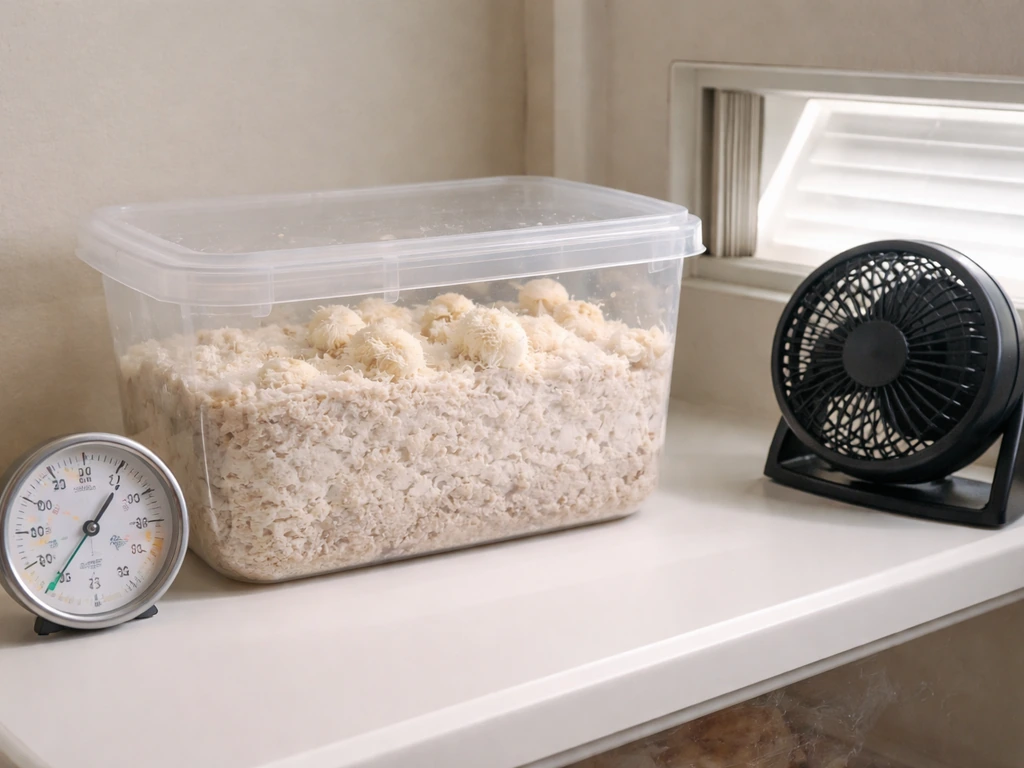
Getting these four conditions right is the difference between a great harvest and a frustrating one. Lion's mane is more sensitive to CO2 and humidity than many other mushroom species, so it's worth understanding what each condition does.
Temperature
Lion's mane likes it cooler than most people's lounges in summer. The target fruiting temperature across different kits is 16–25°C (61–77°F), but the sweet spot for good, dense growth is 16–21°C. MycoCultures specifies 17–25°C for fruiting and 9–15°C for primordia formation (the earliest pin stage). North Spore's guide lists 55–70°F (13–21°C) for the whole fruiting phase. NCAT's Mushroom Cultivation guide lists Lion's Mane optimal fruiting temperature around 60, 68°F (16, 20°C) North Spore's guide lists 55–70°F (13–21°C) for the whole fruiting phase.. If your room runs warmer than 24°C consistently, move the kit somewhere cooler or grow in autumn and winter when UK homes are naturally in range.
Humidity
This is the condition beginners most often underestimate. Lion's mane needs 85–95% relative humidity at the fruiting surface. That sounds extreme but it's achievable with twice-daily misting inside a box kit or humidity tent. North Spore breaks it into two phases: 90–95% humidity while pins are forming, dropping slightly to 80–90% once the fruitbody is developing. If your home is very dry (common with central heating in UK winters), use a simple humidity tent: take a large plastic bag, poke it with lots of finger-width holes, and drape it loosely over the kit. This traps moisture without blocking all airflow.
Fresh air exchange (CO2)
Lion's mane is unusually sensitive to CO2 buildup. High CO2 causes the mushroom to grow outward in strange, coral-like strands instead of forming a compact, round fruitbody. North Spore targets below 1,000 ppm CO2 during fruiting, with 500–700 ppm during the pinning phase. MycoCultures also specifies under 1,000 ppm. In practice, this means you need to fan or open the tent/box briefly at least twice a day when you mist. Don't seal the kit completely airtight. Marvellous Mushrooms specifically warns that growing in a sealed mono-tub reduces airflow and causes that open, coral-like growth pattern.
Light
Lion's mane doesn't need a lot of light but it does need some to orient growth properly. MycoCultures specifies 400–1,200 lux, which is roughly the light level near a window on a cloudy day or under standard indoor lighting. Avoid direct sunlight (dries the block out too fast) and avoid complete darkness (can slow pinning). A north-facing windowsill or a well-lit kitchen shelf is ideal.
Troubleshooting common problems and what to adjust next
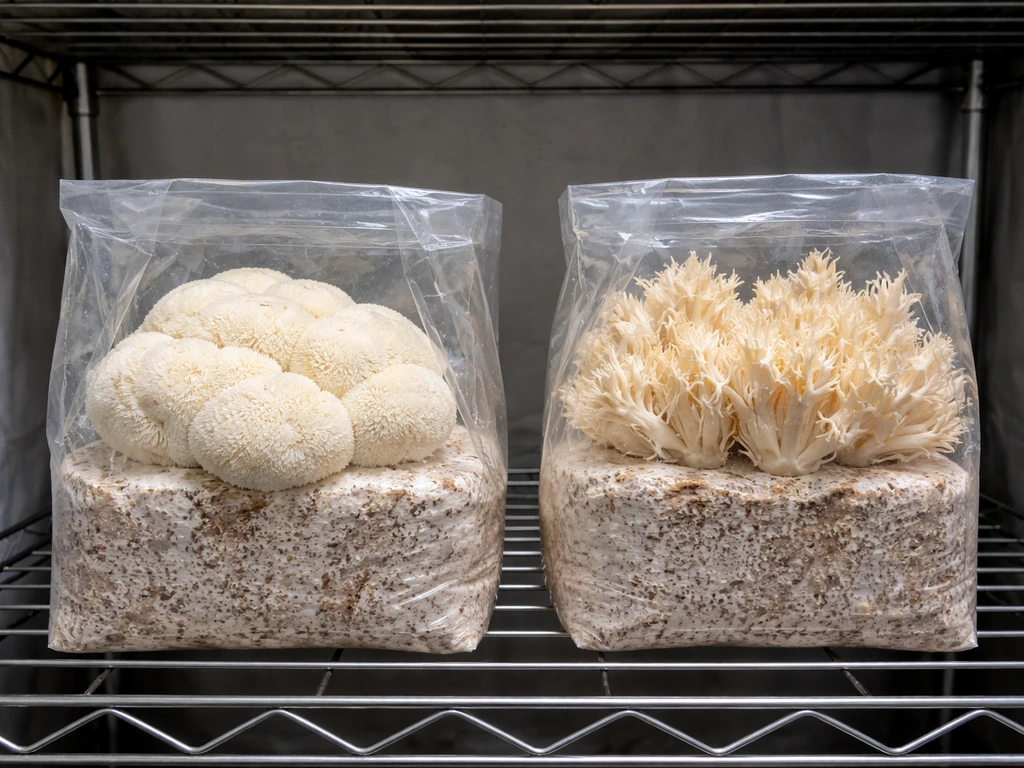
Most problems with lion's mane kits come down to one of four issues: the block is too dry, CO2 is too high, temperature is wrong, or the block has contamination. Here's how to diagnose and fix each one.
| Problem | Likely cause | What to do |
|---|---|---|
| No pins after 15–20 days | Too dry, too warm, or block needs a shock | Increase misting frequency, check temperature is below 24°C, try a cold shock (refrigerate for 8 hours per North Spore's advice) |
| Coral-like or stringy growth instead of round pom-pom | Too much CO2, not enough fresh air | Open the tent or box more frequently, fan briefly when misting, don't seal the kit airtight |
| Brown or yellowing mushroom surface | Direct misting on fruitbody, or too warm | Stop misting directly onto mushrooms, spray box walls instead, lower temperature if possible |
| Green, black, or pink patches on block | Contamination (mould) | Do not try to grow through it; contact your supplier and request a replacement |
| Block looks dry and is pulling away from the bag | Insufficient humidity between misting sessions | Add a humidity tent (large plastic bag with holes draped over the kit) between misting sessions |
| Second flush not appearing after 3 weeks | Block needs rehydrating | Dunk the block in water for 2 hours (GroCycle method), drain fully, return to growing conditions |
| Mushrooms growing inside the bag instead of out the cut | Cut too small or bag not folded correctly | Widen the cut slightly, check the bag is folded so the opening faces outward |
One gotcha that catches a lot of people: lion's mane pins can look almost invisible at first, like tiny white fuzz at the cut site. If you're not sure whether you're seeing pins or just surface mycelium, look closely with a phone camera. Real pins are slightly raised bumps with a distinct 3D shape. If you are uncertain, keep misting and give it another 3–5 days before assuming something is wrong.
If you've grown other mushroom varieties and are used to mycelium grow kit or monotub setups, lion's mane requires a bit more attention to airflow than many other species. If you are used to sealed-environment methods like monotubs or boil-and-bag CVG setups, remember that lion's mane kit airflow needs are different mycelium grow kit or monotub setups. The coral-growth problem is common in beginners who apply techniques from sealed-environment kits to lion's mane without adjusting for its CO2 sensitivity.
Harvesting, expected yields, and what to do after the first flush
When to harvest
Harvest before the mushroom starts to look a bit ragged at the edges. The visual cues to watch for: the fruitbody should still be white or very slightly cream, round and dense, and the 'teeth' or spines on the underside should be forming but not yet drooping. If you see fine white dust settling around the kit, that's spores dropping and you've left it a day or two too long. Marvellous Mushrooms says to harvest immediately if you see that dust. North Spore's rule is to harvest before caps flatten or become concave. For box kits from GroCycle, the full development from first pins to harvest is usually 7–14 days.
How to harvest
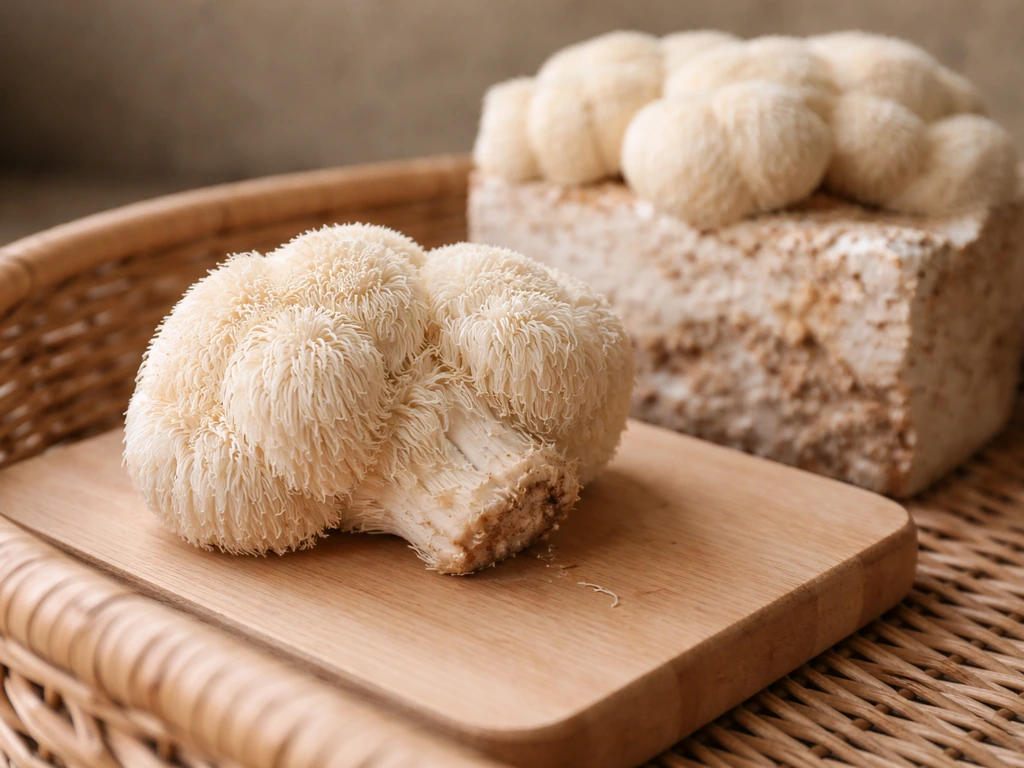
Twist and pull gently at the base, or use a clean knife to cut the mushroom at the base of where it meets the block. Don't leave bits of old mushroom attached to the block surface as they can rot and encourage contamination. After removing the fruitbody, wipe the surface clean with a damp cloth if needed.
Yield expectations
North Spore's Spray and Grow kit typically yields between half a pound and 2 lbs (roughly 225–900g) on the first flush. Subsequent flushes get smaller as the block uses up its nutrients, but you can realistically expect two to three total harvests from one kit. MycoCultures says 3 or more flushes are possible with good care. Don't be discouraged if your second flush is noticeably smaller than the first; that's completely normal.
Getting a second and third flush
After your first harvest, the block needs a rest and a rehydration before it will fruit again. MycoCultures recommends resting the block in darkness at a temperature below your fruiting temperature for 4–7 days, then rehydrating it by heavy spraying or dunking and draining any excess water before returning it to fruiting conditions. GroCycle's method is slightly different: remove the grow bag from the box, place it slit-side down in a bowl or sink of water for roughly 2 hours, then drain it and return the bag to the growing box with the top folded down. Expect the second crop to begin 10–20 days after that, sometimes longer. If you're using a North Spore fruiting block and have a fruiting chamber, you can leave the humidity and fan running for about two weeks after the first flush to encourage new pins.
Once the block has given its last flush, it doesn't have to go straight in the bin. You can bury it in a garden bed or compost heap, and some growers get a surprise bonus flush outdoors. It's also excellent compost material. At that point, if you've enjoyed the process, you're ready to step up to something more involved, like working from a mycelium grow kit you inoculate yourself, or exploring what makes other mushroom species (like the more challenging morel) behave differently. Do morel grow kits work, and how do they compare to lion's mane grow kits in difficulty and reliability more challenging morel. But for now, one successful lion's mane harvest is a genuinely satisfying win and the skills you've built carry straight across to your next kit.
FAQ
Can I leave a lion's mane grow kit alone for a day if I can’t mist twice a day?
Yes, but only up to the point where you can still maintain high humidity at the fruiting surface. If you reduce misting frequency, expect slower pinning and more dry-spots, which often leads to smaller, fuzzy growth. If you will be away, either choose a box-style kit with more stable humidity or set up a loosely draped humidity tent (not airtight) to buffer the dry air during the gap.
What’s the best way to clean lion’s mane, can I rinse it before harvest?
Don’t wash the fruiting surface under a tap or spray with water pressure. If you must clean, use a clean, damp cloth to wipe the base area after harvesting, or simply remove any detached debris with fingertips. Wetting the mushrooms directly (especially after they start forming) can increase browning and speed up spoilage.
If the block is white but there are no pins, what should I check first?
Not necessarily. A kit can look fully colonised yet still fail to fruit if the environment shifts after you cut or open it. Re-check the basics first, temperature range, humidity, and fresh air, then confirm you made the correct cut and that you did not accidentally block or cover the designated window or filter area.
How can I tell the difference between normal colour change and mould on the kit?
It depends on where you see the colour. Green, black, pink, or orange patches on the block usually mean contamination and the kit should be stopped. Light yellowing or a slight cream shift can happen with aging or stress, but it should remain uniform and not form spotted or fuzzy coloured growth. When in doubt, isolate it from other grows and contact the supplier.
Will moving the kit closer to a window help, or can too much light ruin it?
Some light is good, too little can delay pinning. If you’ve been growing in near-darkness, move the kit to bright, indirect light (near a window or under indoor lighting) but keep it away from direct sun. If you switch from darkness to bright light abruptly, it can dry the surface faster, so monitor humidity closely after the move.
What airflow mistakes most often cause coral-like or oddly shaped growth?
Lion’s mane is sensitive to CO2, and the most common airflow mistake is sealing it completely or leaving it inside a stagnant cabinet. Instead, use the kit’s intended box or tent opening system, fan briefly at misting times, and avoid covering vents or tightening bags beyond the instructions.
My kit started dropping white dust, did I wait too long, can the rest of the kit still produce?
If you see dust settling around the kit, spores are dropping and the mushrooms have likely been left slightly too long. The practical fix is to harvest immediately at that point next time, and to keep misting around the block, not directly on the developing tips. Spores dropped already won’t ruin the whole kit, but it can reduce quality and speed up subsequent deterioration.
How long should I wait between harvest one and trying again for flush two?
Don’t force a second flush. After harvest, rehydrate and rest using the brand’s method, then return to fruiting conditions only when you see renewed surface activity. If you try to resume misting and airflow immediately without a proper rest period, you may get very weak pinning or uneven, thin fruits.
What’s the biggest risk if I cut the bag or block slightly differently from the instructions?
The best practice is to follow the brand’s cutting guide exactly, but avoid cutting too deep into the substrate mass. A cut that is too small can restrict how mushrooms emerge, while an overly large or poorly positioned cut can expose areas that dry out or contaminate. Use the kit’s window or seam guidance and keep the area misted until pins appear.
Should I add a DIY humidity tent even when my kit already has a box-style setup?
You can use a simple humidity tent even if you have a box kit, but don’t stack multiple barriers that block all airflow. If you already have a built-in humidity box, only add a tent if your room is extremely dry, and ensure there are enough exchange points for CO2 to escape during misting.
Is it okay if my home temperature fluctuates a lot day to night?
Yes, temperature swings can cause confusion, especially warm afternoons followed by cool nights. Keep the kit in the most stable room you have, avoid radiator heat and cold drafts near windows, and expect the pin timeline to stretch if the room spends many hours above the recommended range.
Can I open the box or bag to check progress frequently?
You should never need to remove the block from its bag for long handling periods. If you do need to check contamination or fix a cut, do it quickly with clean hands, then return it immediately to the proper environment. Leaving it out while you do other tasks is a fast route to surface drying.