
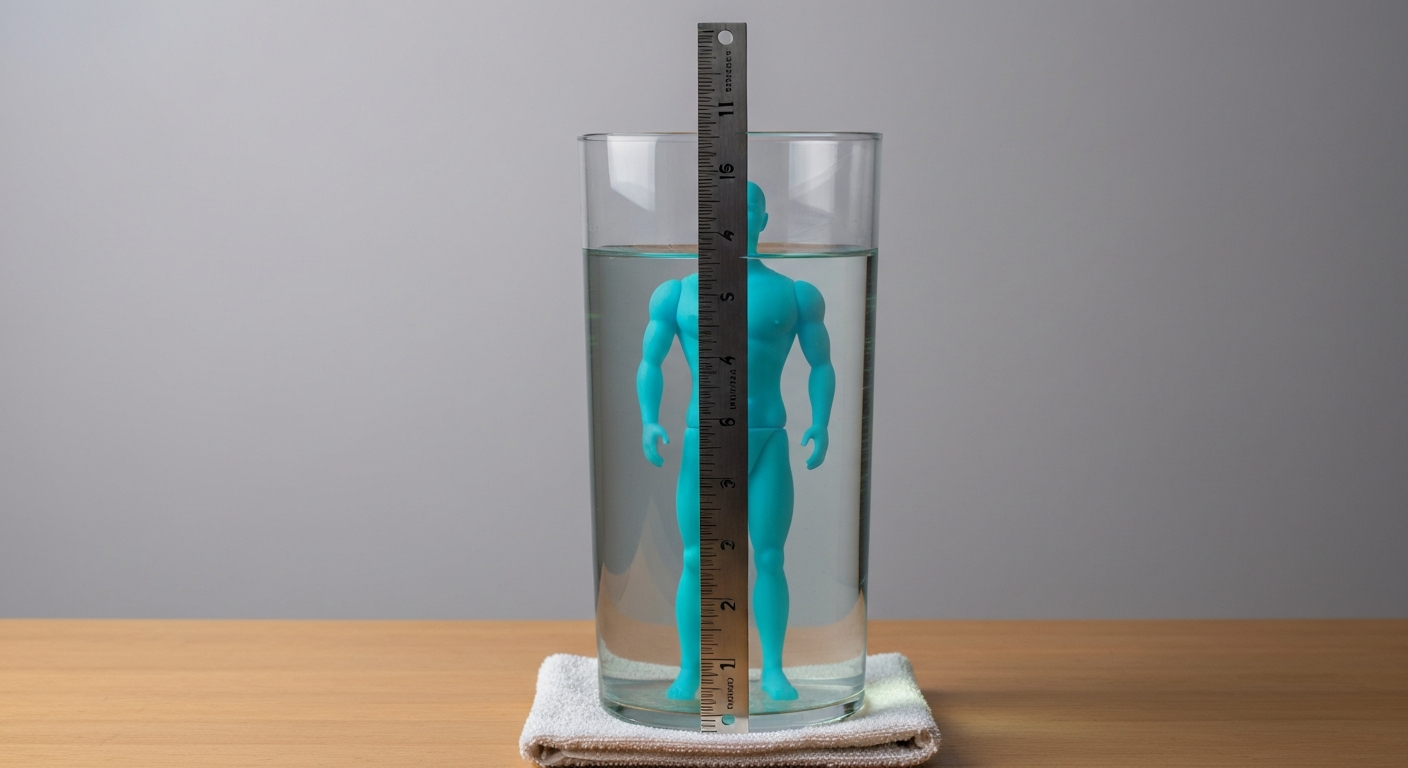
A 'Grow Your Own Boyfriend' kit is a novelty water-expandable toy: a small compressed polymer figure, roughly 2 to 2.5 inches tall, that you drop into a container of clean water and watch expand to around 12 to 15 inches over 72 hours. That's it. No soil, no seeds, no biology. The figure is made from a superabsorbent polymer (SAP), most commonly sodium polyacrylate, which soaks up hundreds of times its own weight in water. Sodium polyacrylate (ACS Molecule of the Week) is described as a “superabsorbent polymer” able to absorb and retain hundreds of times its weight in water. The most widely sold branded version (Forum Novelties, SKU F56963) claims a 6x size increase and advertises that growth begins within about 2 hours. I've worked through quite a few of these kits and the short version of good results is: use clean room-temperature water, pick the right container size, and be patient beyond the 72-hour mark if yours is running slow.
Grow Your Own Boyfriend Instructions: Safe, Step-by-Step Guide

What 'Grow Your Own Boyfriend' kits actually are
Let's be completely clear upfront: this is a novelty toy, not a living organism, not a plant kit, and not anything that grows on its own. The figure doesn't breathe, eat, or reproduce. The 'growth' is purely physical, the polymer network inside the figure absorbs water and expands the material. When you remove it from the water and let it dry, it shrinks back down. The manufacturer notes that you can dry and regrow the figure multiple times, which is true in practice, though repeated cycles can degrade the texture over time.
The figure itself is usually pre-molded into a humanoid shape, the 'boyfriend', and arrives compressed and firm, almost rubbery or spongy. Some kits include a small accessory like a fabric patch or novelty card. Packaging is typically minimal: a small blister card or sealed bag with a printed leaflet rather than a full instruction booklet. If you're expecting a complex setup, you'll actually be relieved, the core instruction really is just 'add water.' The complexity comes in the details: which water, how much, at what temperature, and in what kind of container.
Age, safety and allergy warnings, read this before you open the package
These kits are marketed toward teens and adults as novelty gifts, and for good reason. The dry compressed figure is small enough to be a choking hazard for young children, and the expanded figure, while soft, can become a serious problem if ingested. U.S. poison control centers have documented cases where children swallowed expanding water-bead toys and developed intestinal obstructions because the material kept swelling inside the digestive tract. Wiley / JPGN Reports, Water Bead Ingestions and Clinical Outcomes (peer‑reviewed summary) summarizes case series and poison‑center studies showing many ingestions require only observation but some cause bowel obstruction and need surgery, so clinical management is symptom- and case-dependent (imaging, admission, whole-bowel irrigation or surgery considered) Wiley / JPGN Reports — Water Bead Ingestions and Clinical Outcomes (peer‑reviewed summary). This is not a theoretical risk. If a child swallows any part of this kit, call Poison Help immediately at 1-800-222-1222 and do not induce vomiting.
- Not suitable for children under 3 years old due to choking hazard (small dry figure, small parts).
- Children under 8 should only handle this kit under direct adult supervision.
- If swallowed by a child or pet: call Poison Control at 1-800-222-1222 (U.S.) immediately.
- Do not induce vomiting after ingestion — follow Poison Control guidance only.
- If the dry polymer dust contacts eyes, rinse immediately with clean water for at least 15 minutes and seek medical advice.
- People with known sensitivities to polyacrylate-based products (some medical adhesives, gel products) should handle with care and avoid prolonged skin contact with the wet figure.
- Keep away from pets. The same ingestion-obstruction risk applies to animals.
On the allergy side, sodium polyacrylate is generally considered low-hazard for intact skin contact, but it's not a tested cosmetic ingredient. If you notice any skin irritation, redness, or itching after handling the wet figure, rinse your hands thoroughly and discontinue contact. If irritation persists, consult a doctor.
Genuine kit vs. knockoff, what to check before you trust the packaging
Because these kits are cheap, lightweight, and easy to manufacture, the novelty grow-figure market has a lot of vague knockoffs. Some are perfectly fine; others use lower-grade polymer that expands poorly, cracks early, or bleeds dye into your water. Here's how to do a quick authenticity check before you invest time in the setup.
- Check for a brand name and country of manufacture on the packaging. Legitimate retailers like Toynk and Giggle Novelties carry named brands (Forum Novelties is the most common for this category). Generic listings with no brand at all are a red flag.
- Look for a specific SKU or item number (Forum Novelties uses F56963 for the Grow a Boyfriend SKU). If there's no product code anywhere, the kit may be an unregulated copy.
- Packaging should state the initial size, expected final size, and a rough timeframe. If the packaging just says 'grows in water' with no specifics, you're dealing with an uncertified knockoff.
- Check for ASTM F963 compliance language or CPSIA tracking label text on the packaging. U.S.-sold toys are legally required to carry these under federal safety regulations.
- Inspect the figure itself: a genuine compressed polymer figure should feel uniformly firm and slightly rubbery, not crumbly, powdery, or sticky. Crumbling or powder residue inside the sealed bag suggests poor manufacturing or a damaged batch.
- Smell the unopened bag lightly. A faint chemical or plastic smell is normal. A strong ammonia or rotting smell suggests the kit has been damaged or exposed to moisture before sale.
- Compare the color to product photos. Major knockoffs often use unstable dyes that bleed heavily into water from the first hour, staining your container.
Unboxing checklist, what to do the moment you open the kit
Don't just tear it open and dump it in water. Taking two minutes to run through this checklist saves you a lot of frustration later, especially if you're planning this as a gift activity or classroom demo.
- Check the seal: was the packaging sealed when you received it? Broken or re-sealed packaging may mean the figure was exposed to humidity and has already partially expanded or degraded.
- Visual check: remove the figure gently and inspect it. It should be compact, firm, and uniformly shaped. Look for cracks, broken sections, or flattened areas that suggest rough handling in transit.
- Check for missing pieces: most kits are just the figure plus a small instruction leaflet. If your packaging advertises accessories (a novelty 'certificate,' fabric grass patch, or a small container), confirm they're all present.
- Smell test: a faint polymer or plastic scent is normal. Anything sour, musty, or strongly chemical is worth noting — if it smells like mold or rot, the kit has likely been compromised by moisture exposure.
- Check the instruction leaflet (if included) for an expiration or 'best used by' date. Not all kits include this, but if one is printed and it has passed, the polymer may not expand reliably.
- Check for dye transfer: press the figure gently against a white tissue. Some dye bleed is normal and expected. Heavy immediate bleed (saturated color on the tissue) means you'll want a non-porous, easy-clean container.
- Read whatever instructions came with your specific kit before proceeding. Manufacturer details like water volume and timing override any general guide, including this one.
Parts and tools you'll need
| Item | Included in Kit? | Notes |
|---|---|---|
| Compressed polymer boyfriend figure | Yes | The main expandable figure, pre-molded. |
| Instruction leaflet | Usually yes | May be printed on the packaging panel itself rather than a separate sheet. |
| Novelty accessories (certificate, fabric patch, etc.) | Sometimes | Check your specific packaging — not all SKUs include these. |
| Container (bowl, bucket, or tall vessel) | No — you supply this | Must be large enough for the expanded figure: at least 14–16 inches tall and 8–10 inches wide. A standard kitchen mixing bowl often works; a tall pitcher or clean bucket is better. |
| Clean room-temperature water | No — you supply this | Tap water is fine. Avoid saline water, hard well water with high mineral content, or hot water above ~25°C/77°F — all reduce expansion. |
| Measuring cup or jug (optional but helpful) | No | Helps ensure you use enough water. Most figures need to be fully submerged throughout the soak. |
| Trivet, tray, or towel for under the container | No | Dye bleed into the water can stain surfaces. Protect your table. |
| Rubber gloves (optional) | No | Useful if you want to handle the wet figure without dye transfer to your hands. |
| Timer or reminder app | No | You'll want to check at 2-hour, 24-hour, 48-hour, and 72-hour marks. |
Step-by-step setup and expansion walkthrough
This walkthrough is written for the most common water-expandable polymer figure kits in the 'Grow Your Own Boyfriend' category. If your specific kit's printed instructions differ on water volume or timing, follow those first. This guide fills in the details the packaging leaflet usually skips.
- Choose your container before you add any water. You need a vessel that can hold the figure fully submerged at its final expanded size — that means at least 14 to 16 inches of depth and 8 to 10 inches of diameter. A standard large mixing bowl is borderline; a tall stockpot, a clean 2-gallon bucket, or a deep storage container works better. If the figure runs out of space partway through expansion, it will expand asymmetrically.
- Place a protective liner (a folded towel, a tray, or a sheet of parchment) under the container. Dye from the figure will bleed into the water and that water can splash or wick onto your surface.
- Fill the container with clean, fresh, room-temperature water — approximately 60°F to 75°F (15°C to 24°C). This temperature range supports the best swelling kinetics for sodium polyacrylate. Cold water slows expansion noticeably; hot water (above 85°F/30°C) can cause uneven or reduced swelling. Fill the container enough to fully submerge the figure with at least 2 to 3 inches of water above it.
- Use fresh tap water. Avoid sparkling water, salty water, water from a water softener with added salt, or water that has sat with cleaning products in it. Ionic content (especially calcium, magnesium, and sodium salts) competes with the polymer's ability to absorb water and will significantly reduce your final size — this is one of the most common reasons kits underperform.
- Gently place the compressed figure into the water. Do not squeeze, bend, or force it in. Lower it in and let it settle at the bottom of the container.
- Check at 2 hours: the figure should visibly have begun to swell. If it looks completely unchanged, it may be resting on itself and blocking water access — gently rotate it with a spoon (not your bare hands if you want to avoid dye staining) so all surfaces are exposed to fresh water.
- Check at 24 hours: the figure should be noticeably larger — roughly 2 to 3 times its original size at this stage. If the water has become very murky, cloudy, or slimy, carefully pour it out and replace it with fresh room-temperature water. Cloudy water can indicate dye bleed (normal) or the start of microbial activity (especially in warm rooms — replace it immediately if it smells off).
- Check at 48 hours: you should be at roughly 75 to 80 percent of the advertised final size. This is also the time to check whether the figure is expanding evenly. Gently rotate it again if one side looks compressed against the container wall.
- Check at 72 hours: this is the manufacturer's stated full-size endpoint. Forum Novelties' packaging claims a final size of approximately 12 to 15 inches. In practice, I've seen kits reach full size closer to 84 to 96 hours depending on water temperature and polymer batch. Don't be discouraged if yours isn't quite there at exactly 72 hours — give it another 12 to 24 hours with fresh water before concluding it's underperforming.
- Once the figure has stopped visibly expanding (check two measurements 6 to 8 hours apart — if they're the same, it's done), you can lift it out carefully with both hands supporting its full weight. The expanded figure is soft and fragile at this point; sharp pressure will dent or tear it.
Growth stage timeline, what to expect and when
| Time Point | Expected Size vs. Original | What to Check / Do |
|---|---|---|
| 0 hours (just submerged) | 100% (original size, ~2–2.5 in) | Figure placed in water, sitting flat or upright. Surface should start to look slightly wet/softened within 15–30 min. |
| 2 hours | ~120–150% | Visible swelling begins. Figure looks puffy or rounded. Check it hasn't settled face-down on the container floor blocking water flow. Rotate gently if needed. |
| 12 hours | ~200–250% | Significant size increase. Shape should be recognizable. Water may be lightly tinted from dye bleed — this is normal. |
| 24 hours | ~300–350% | Roughly 3x original size. If water looks murky or slimy, replace with fresh room-temperature water now. Check that figure has room to expand — move to a larger container if it's touching the walls. |
| 48 hours | ~400–500% | About 75–80% of advertised final size. Shape detail should be visible. Rotate if one side seems compressed. Check room temperature — if it's cold (below 60°F/15°C), place the container in a warmer spot. |
| 72 hours | ~600% (target: 12–15 in) | Manufacturer's stated full-size endpoint. If still growing, give it another 12–24 hours. If growth has stalled well below expected size, see the troubleshooting section. |
| 84–96 hours | Full size or close to it | Most kits in my experience hit their peak somewhere in this extended window. Stop checking every few hours and let it sit undisturbed. |
Suggested images and diagrams to include
If you're recreating this guide with photographs or building a visual companion, here are the specific images that would be most useful for readers working through their own kit. These are the visuals I'd want if I were setting this up for the first time.
- Container size comparison photo: show a standard mixing bowl, a tall stockpot, and a 2-gallon bucket side by side with a ruler or the dry figure placed inside each for scale. Caption which is 'too small,' 'borderline,' and 'recommended.'
- Dry figure close-up: the figure before any water contact, showing its compressed, firm appearance and approximate 2 to 2.5 inch size next to a common reference object (a coin or a pen).
- Correct vs. incorrect water fill: two photos of the container — one with the figure fully submerged with water above it (correct), and one where the top of the figure is exposed above the waterline (incorrect).
- 24-hour progress shot: figure in the container at roughly 3x size to show what healthy mid-point expansion looks like.
- 72-hour full expansion shot: figure at claimed full size next to a ruler to verify the claimed 12 to 15 inch range — or show an honest result if it falls short.
- Dye bleed comparison: two containers of water — one with light normal tinting and one with heavy unnatural staining — to show readers what's normal vs. what suggests a poor-quality product.
- Misshapen growth example: a figure that expanded unevenly because it was trapped against the container wall — useful to illustrate why container size matters.
- Drying stages: the figure at full size, then at 24 hours of air drying, then fully dried and re-compressed — so readers understand the reversible cycle.
- Packaging authenticity check: annotated photo of genuine packaging showing where to look for the brand name, SKU, CPSIA tracking label, and size claims.
Troubleshooting common problems
| Problem | Likely Cause | Fix |
|---|---|---|
| Little or no growth after 12+ hours | Water is too cold, too salty, or contains mineral inhibitors (hard water, softened water with salt) | Replace water with fresh room-temperature tap water. If using well water, try bottled still water. Move container to a warmer spot (65–75°F/18–24°C). |
| Growth stops well short of advertised size | Polymer batch is lower grade, water quality is poor, or container is too small and figure is physically compressed against walls | Move to a larger container, replace with fresh water, and allow an extra 24 hours. Some kits genuinely underperform manufacturer claims — this is a known user complaint. |
| Figure is expanding unevenly or looks lumpy | Figure is resting face-down or against the container wall, blocking water access to one side | Gently rotate with a spoon or use clean tongs. Ensure the container is wide enough for the final expanded size. |
| Water is cloudy, slimy, or has a bad smell | Dye bleed is normal, but slimy film suggests microbial growth, especially in warm conditions | Pour out the water immediately, rinse the figure gently under room-temperature tap water, and refill the container with fresh water. Discard if smell is strong — do not continue use with a suspected contaminated kit. |
| Figure feels mushy, overly soft, or is falling apart | Too much time in water past full expansion, or water temperature too high, weakening the polymer network | Remove the figure immediately and allow it to partially air-dry to firm up. Rehydration cycles are possible but each one can slightly degrade texture. |
| Figure is crumbling or breaking at edges | Physical damage during transit, or polymer is degraded from moisture exposure before use (compromised kit) | Small cracks: allow to dry naturally and reshape gently. Major crumbling suggests a defective or damaged product — contact the retailer for a replacement. |
| Heavy dye staining on hands, container, or surface | High dye load in the polymer, especially in knockoff or unbranded kits | Wear gloves when handling. Soak stained surfaces with diluted dish soap and water. Most dye staining is water-soluble and cleans up easily. |
| Figure is stuck to the container bottom | Surface adhesion as polymer softens and conforms to the container surface | Gently slide a silicone spatula or spoon underneath to break the seal. Do not pull from the top — the soft expanded figure will tear. |
Care, drying, repair and storage
Drying the figure after expansion
When you're done with the expansion cycle, lift the figure out of the water carefully, use both hands to support it fully, since it's soft and heavy when saturated. Place it on a clean towel or a drying rack in a well-ventilated area away from direct sunlight. Direct sun or heat can cause uneven drying and warping. Allow 24 to 72 hours for air drying at room temperature depending on the ambient humidity. The figure will gradually shrink as water evaporates and return to near its original compressed size. Do not use a hairdryer, oven, or microwave to speed this up, rapid heat causes the polymer to deform or crack.
Repairing minor damage
Small surface cracks or minor chips that appear after drying are usually cosmetic. Let the figure dry completely before assessing the damage, what looks like a deep crack when wet often closes significantly once dry. For a crack in the dry figure, you can try gently pressing the edges together and allowing the next rehydration cycle to 'heal' it, since the softened polymer can sometimes re-fuse minor splits as it swells. Do not use superglue or standard craft adhesives on a figure you plan to rehydrate, they will not hold under water exposure and may release chemicals into the soaking water.
Long-term storage
- Store the fully dried figure in its original packaging if possible, or in a sealed zip-lock bag with the air squeezed out.
- Keep it in a cool, dry location away from direct sunlight. UV exposure degrades polymer over time and can cause yellowing or brittleness.
- Avoid storing near moisture sources (bathroom cabinets, under sinks). Even ambient humidity over months can cause partial pre-expansion that weakens the figure.
- Do not stack heavy objects on top of the stored figure — the dry polymer is firm but not indestructible under sustained pressure.
- Label the bag with the date if you're storing it long-term. While there's no universal expiry standard for these kits, polymer figures stored for 2 to 3 years may show reduced expansion performance.
Cleaning the container and protecting surfaces
The soaking water will almost certainly be tinted from dye bleed. Pour it down the drain (see the disposal section below for the polymer itself), then rinse the container with warm water and a small amount of dish soap. Most dye staining on plastic or glass containers is water-soluble and cleans up easily. For stains on countertops or wooden surfaces, act fast: wipe up spilled soaking water immediately with a damp cloth. If staining has occurred on a porous surface like unsealed wood, try a paste of baking soda and water left for 10 minutes before wiping. Always put a towel or tray under your container before starting the soak.
Safe disposal and environmental guidance
When you're done with the kit permanently or if the figure has degraded beyond reuse, here's how to dispose of it responsibly. Superabsorbent polymer (SAP) figures should not go down the drain or toilet. The expanded or partially hydrated polymer can block pipes and, at scale, contributes to problems at wastewater treatment facilities. This applies equally to the soaking water if it contains gel fragments or a slimy residue.
- Drain disposal (NO): do not pour gel fragments, expanded polymer pieces, or slimy polymer-laden water down sinks, toilets, or storm drains.
- Solid waste (YES): allow the figure to dry completely. Once fully dried and re-compressed, it can go in your regular household trash (general landfill waste bin). Dried SAP is handled as non-hazardous solid waste in most jurisdictions.
- Recycling (NOT currently applicable): there is no established consumer recycling stream for superabsorbent polymers in most regions. Do not place in curbside recycling bins.
- Compost (generally NO): SAP is not a natural or biodegradable material and does not break down meaningfully in home composting. Some industrial composting programs handle SAPs differently, but this is not standard.
- Soaking water: pour down the sink only if it is free of gel particles and the slimy film has been removed. If it looks thickened or gel-like, strain out any solid material first and dispose of solids in the trash.
- If you suspect the kit contains any components beyond standard polymer (unusual colors, granules, or additives), check the packaging for a Material Safety Data Sheet (MSDS) reference or contact the manufacturer before disposal.
Kit variations explained, water-expandable figures vs. seed kits vs. build-and-grow wood kits
The 'Grow Your Own Boyfriend' name is firmly in the water-expandable polymer toy category, but the broader 'grow your own' and 'grow kit' market includes several very different product types. If you've landed on this page while also looking at other grow kits, it's worth knowing what you're comparing, because the instructions and expectations are completely different.
| Kit Type | How It Works | Key Instructions Difference | Typical Timeframe |
|---|---|---|---|
| Water-expandable polymer figure (this kit) | SAP polymer absorbs water and swells physically. No biology involved. | Water quality, container size, and temperature are the main variables. Clean tap water, room temperature, big enough container. | 2–96 hours for full expansion. |
| Seed/plant grow kits (e.g., 'Grow Your Own' herb kits) | Actual seeds germinate in soil or a growing medium. Requires light, warmth, and ongoing watering. | Planting depth, light placement, drainage, and fertilizer schedules matter. Ongoing care required for weeks. | Days to weeks for germination; months for maturity. |
| Build-and-grow wood kits (e.g., Lowe's Build & Grow) | Pre-cut wooden pieces assembled with tools (nails, hammer). No water or biology involved. | Step-by-step assembly order, tool handling safety, and paint/finish instructions are the core of the guide. | 1–2 hours for assembly. |
The reason this distinction matters is that you might search for 'grow your own' instructions and land on guidance for the wrong category entirely. A seed-starting schedule is irrelevant to a polymer toy, and polymer care tips won't help you with a wooden model kit. If you're working with a seed or plant-based 'grow your own' product, the watering schedules and light requirements in this article don't apply to you, you'll want a plant-focused guide instead.
Related grow kit guides worth bookmarking
If this kit sparked your interest in the broader world of novelty grow toys and DIY kits, there are several closely related walkthroughs on this site that follow the same format. For step-by-step setup of the similar Micro Mini 2 Grow Scooter, see Micro Mini 2 Grow Scooter instructions. The Grow a Sloth instructions cover another popular water-expandable novelty figure from the same product family, many of the water volume and container tips in this article apply there too, so it's a natural next read if you want to try a different figure. The Grow Your Own Dinosaur guide is probably the most popular of the novelty expand-toy category and includes specific notes on the larger scale figures that need extra container depth.
On the non-polymer side of DIY kits, the Grow N Up basketball stand instructions cover a very different type of 'grow' product, an adjustable sports stand for kids that involves mechanical assembly rather than water. If you're looking at that kit for a child and arrived here by mistake, that guide is the one for you. Similarly, the Lowe's Build and Grow monster truck instructions and the Micro Mini 2 grow scooter instructions both fall into the build-and-assemble category: wood or plastic components, tools, and step-by-step construction rather than anything to do with water or polymers. Each of those guides follows the same practical, jargon-free format as this one.
Common questions, quick answers
My figure hasn't grown at all after 24 hours, is it defective?
Not necessarily. The most common cause is water quality: hard tap water, softened water with salt, or cold water (below 60°F/15°C) will dramatically slow or prevent expansion. Try replacing the water with fresh room-temperature water from a different source (bottled still water if you're on a softener system) and give it another 24 hours. If there's still no movement after 48 hours with clean water at the right temperature, the kit is likely defective and you should contact the retailer.
Is the figure safe to display in a home with young children?
The expanded, fully hydrated figure is soft and large enough that it's no longer a choking hazard in its expanded state, but the dry compressed figure absolutely is. Keep the dry kit stored out of reach of children under 8. When the figure is fully expanded and on display, keep it on a high shelf or enclosed surface away from toddlers and pets who might bite or ingest pieces.
Can I speed up the growth by using warm or hot water?
Slightly warm water (up to about 75°F/24°C) is fine and won't harm the process. However, hot water, above roughly 85°F/30°C, can actually reduce the final expansion size and cause uneven swelling. The polymer's swelling capacity is temperature-dependent, and heat above that range disrupts the absorption process. Stick to room temperature for the best results.
The packaging says it can be regrown. How many times can I do that?
Manufacturer claims of multiple rehydration cycles are generally accurate, but each cycle can slightly degrade the polymer, you may notice the figure becomes softer, more prone to surface cracking, or achieves slightly less maximum size with each successive cycle. Most users report 3 to 5 reasonably good cycles before significant degradation. Letting the figure dry completely between cycles (rather than partially drying) preserves it longer.
Where can I get replacement parts or a refund if my kit is defective?
For named-brand kits like Forum Novelties, start with the retailer you purchased from (Toynk, Amazon, Giggle Novelties, etc.), most have straightforward return policies for defective novelty items. Forum Novelties does not typically sell direct-to-consumer replacement figures, so retailer replacement or refund is the practical route. For unbranded knockoffs, check the platform's buyer protection program (Amazon A-to-Z, eBay Money Back Guarantee, etc.).
The water turned bright blue / red / green, is that normal?
Yes, dye bleed into the soaking water is completely normal and expected with almost all polymer grow figures. The dye used to color the figure is water-soluble and will leach out during hydration. It does not affect the expansion or harm the figure. Replace the water if it becomes very thick or slimy, but light-to-moderate color tinting is just part of the process. Avoid letting that water contact fabrics or porous surfaces you care about.
FAQ
What is the single most important factual statement to include at the top of a beginner‑friendly ‘Grow Your Own Boyfriend’ article?
These kits are novelty water‑expandable polymer toys (compressed sponge/SAP figures), not biological, living, or self‑assembling organisms; they expand by absorbing water and are made from superabsorbent polymers such as sodium polyacrylate/polyacrylamide blends. State this plainly and early as a disclaimer.
What verifiable material and chemistry information should the article give to be accurate and model‑agnostic?
Name the material class (superabsorbent polymer, SAP; examples: sodium polyacrylate/polyacrylamide), describe that SAPs absorb large amounts of water (swelling ratio often in the 10s–100s× dry weight, variable by formulation), and note factors that affect swelling (salt/ionic strength, pH, temperature, cross‑link density). Cite authoritative sources (manufacturer SDS, CPSC, peer‑review literature) when stating these effects.
What exact unboxing checks and parts‑and‑tools list should be provided so users know what to expect?
Provide a clear checklist: expected parts — compressed figure(s) or pellet(s), any accessory fabric/mini‑props, instruction leaflet/label; expected package text (brand, recommended age). Tools — transparent container (see size guidance), measuring cup (ml/oz), room‑temperature water supply, thermometer (optional), timer/clock, kitchen towel, gloves (optional), tweezers/scissors for stuck bits. Instruct users to inspect for tears, missing pieces, dye transfer on packaging, or noticeable powder dust and to keep packaging for SKU details.
What container size and water volume guidance is needed to reliably hydrate these kits?
Give a simple rule: container should allow the figure to sit without being crammed and hold ≥2–4× the final hydrated volume. Provide typical numbers from common SKUs: a 2–3 in compressed figure often needs 1–2 liters (~34–68 fl oz) to reach a 10–15 in final size; smaller novelty pellets may hydrate in 200–1000 ml. Emphasize following any packet ratio if printed and that higher ionic content or small containers restricting expansion reduce final size.
What temperature guidance should be included for safe, predictable expansion?
Recommend use of clean, room‑temperature water (about 18–25 °C / 64–77 °F). Explain that moderate warmth (up to ~30 °C) can speed kinetics slightly, but very hot water or extreme temperatures can change texture or dye behavior. Warn that saline or hard water reduces swelling and so does very cold water (slower kinetics).
What specific, time‑based step‑by‑step setup should be included for beginners?
Provide numbered steps: 1) Unbox and check parts; 2) Place compressed figure in clean container with enough room; 3) Measure and pour room‑temperature freshwater (see volume guidance); 4) Start timer and note time zero; 5) Check after 1–2 hours for initial swelling, gently reposition if needed; 6) At 4–8 hours expect substantial growth for many brands; 7) Replace water if cloudy; 8) Allow up to 72 hours for full equilibration per many manufacturer claims; 9) Gently pat dry with towel for display, or follow drying instructions to shrink/regrow; 10) Supervise first run and keep away from young children/pets.