Mix 3.5 tablespoons of Bonide Root & Grow concentrate into one gallon of water, shake the bottle well first, then pour that diluted solution directly onto the soil and roots at planting time. For small annual flowers like mums or geraniums, use about 1 pint per plant. For larger shrubs, step that up to 3 pints. For established houseplants, use half a cup of diluted solution per quart of soil in the pot (a standard 6-inch pot holds roughly 1 quart). That is the core of how this product works: it is a soil drench, not a cutting dip, so you water it in right at transplanting or seeding and let the IBA (Indole-3-butyric acid) do its job at the roots.
Root and Grow Root Stimulator Instructions: How to Use
Marcus Thornfield
3 May 2026
Quick start checklist before you apply
Before you mix anything, run through this list. Skipping these steps is the most common reason people get disappointing results with Root & Grow.
- Shake the concentrate bottle well before every use — the label literally says this first, and it matters because the IBA can settle
- Have your gallon of clean water ready before you open the concentrate
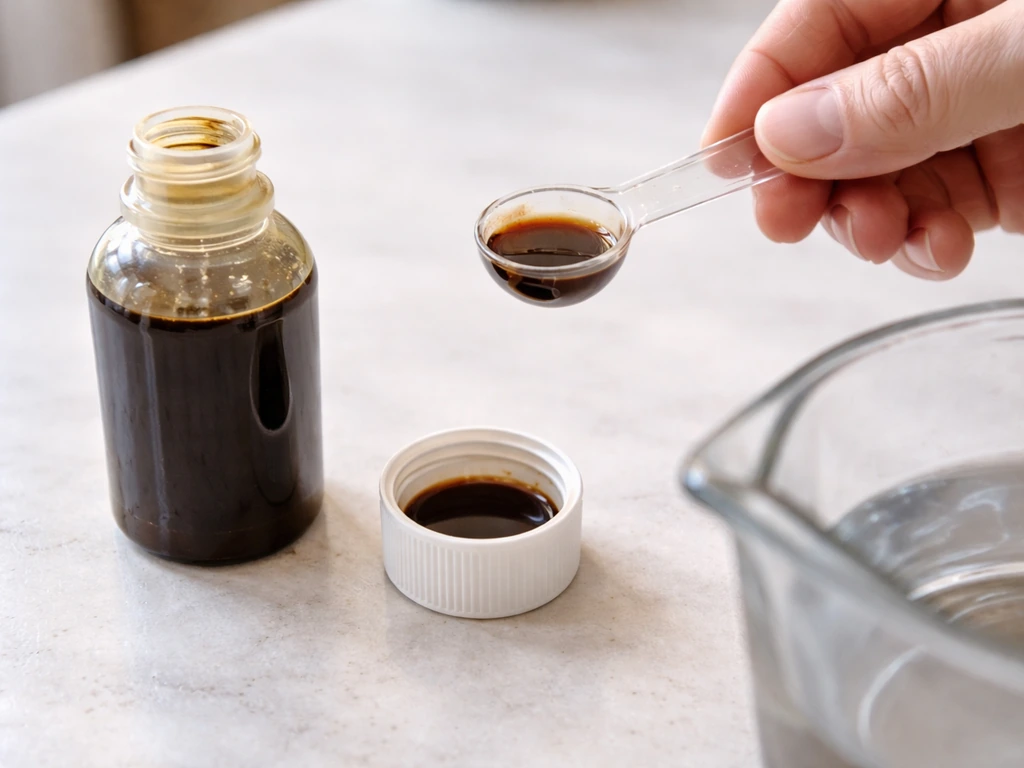
- Measure accurately: 3.5 tablespoons per gallon (that is also 16 capfuls if you are using the bottle cap as your measuring tool)
- Make sure your planting hole, container, or seed bed is already prepared before you mix — diluted solution should go on right away
- Check that your soil or growing medium has some moisture already; bone-dry soil repels liquid and the solution won't reach the root zone evenly
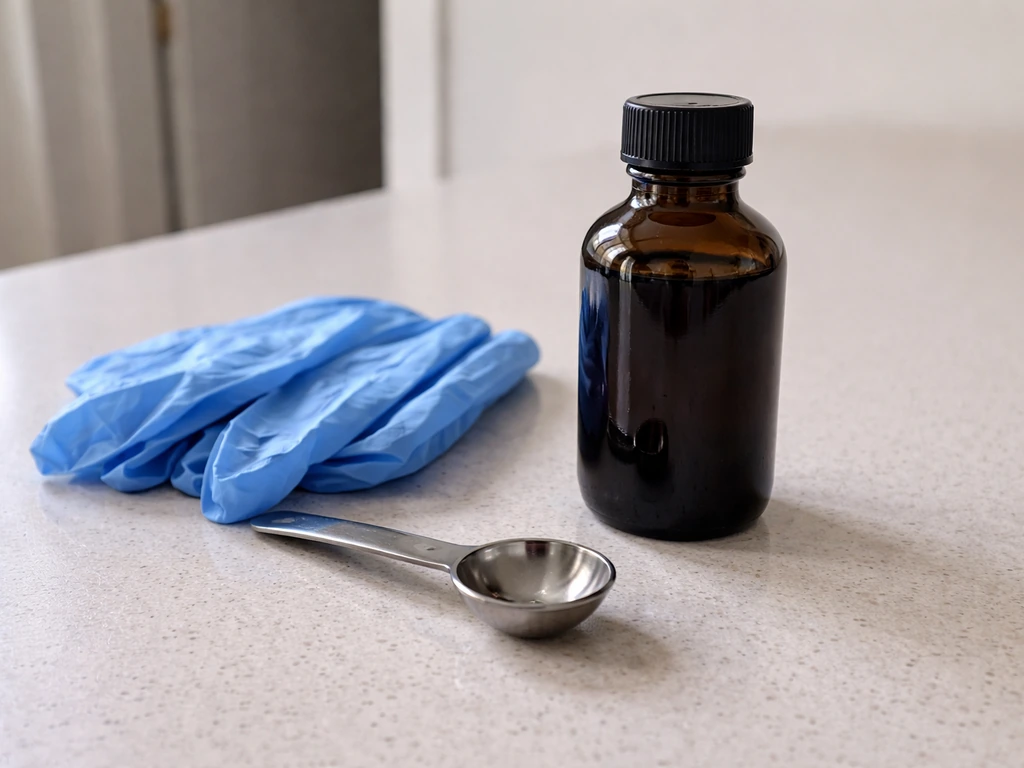
- Put on protective gloves and avoid getting the concentrate in your eyes — more on safety at the end of this guide
- Confirm you are in a situation where this product applies: transplanting, seeding, or feeding established plants (not dipping bare cuttings into a liquid, which is a different type of rooting hormone product)
Which plants to use it on (and which to skip)
Root & Grow has a genuinely wide plant list. The label covers ornamentals including flowers, shrubs, groundcovers, and trees. On the edible side it includes fruiting vegetables like tomatoes, peppers, and eggplant; cucurbits like cucumbers, melons, and pumpkins; leafy greens including lettuce, spinach, and chard; root vegetables like carrots, potatoes, and onions; and small fruits like strawberries, blueberries, raspberries, and grapes. For lawns it works at new seeding and sodding too. That is a lot of ground covered.
One heads-up if you are in California: the label includes a note that some vegetable and fruit/berry crop uses are not approved for California. Check the label panel for the asterisk (*) notation next to specific crop groups if you are growing in CA.
Where Root & Grow is not the right tool: if you want to propagate stem cuttings by dipping them into a rooting hormone before potting, this product is not designed for that. Its active ingredient, IBA, is the same compound used in rooting powders and gels, but Root & Grow is formulated as a liquid concentrate to be mixed and watered into soil. Bonide Root & Grow Concentrate’s label describes it as a “4-10-3 fertilizer with IBA growth hormone” and says it contains the root stimulator indole-3-butyric acid (IBA) active ingredient, IBA. It works at the root zone of things you are transplanting or seeding, not as a pre-planting cutting dip. If your project is specifically about rooting bare cuttings in water or a rooting medium, you would want a dedicated rooting gel or powder product instead. The Garden Rich Root and Grow instructions and Garden Reach Root and Grow instructions cover some of those related scenarios if you are comparing options.
Exactly how to apply it (step by step)
The application method is a soil drench, meaning you pour the diluted solution directly onto the soil and roots. If you want more detail on the exact mixing and dilution steps, follow the guidance for Root & Grow dosing next soil drench. Here is how that plays out in the three main situations you will encounter:
At transplanting (moving a plant from one container or location to another)
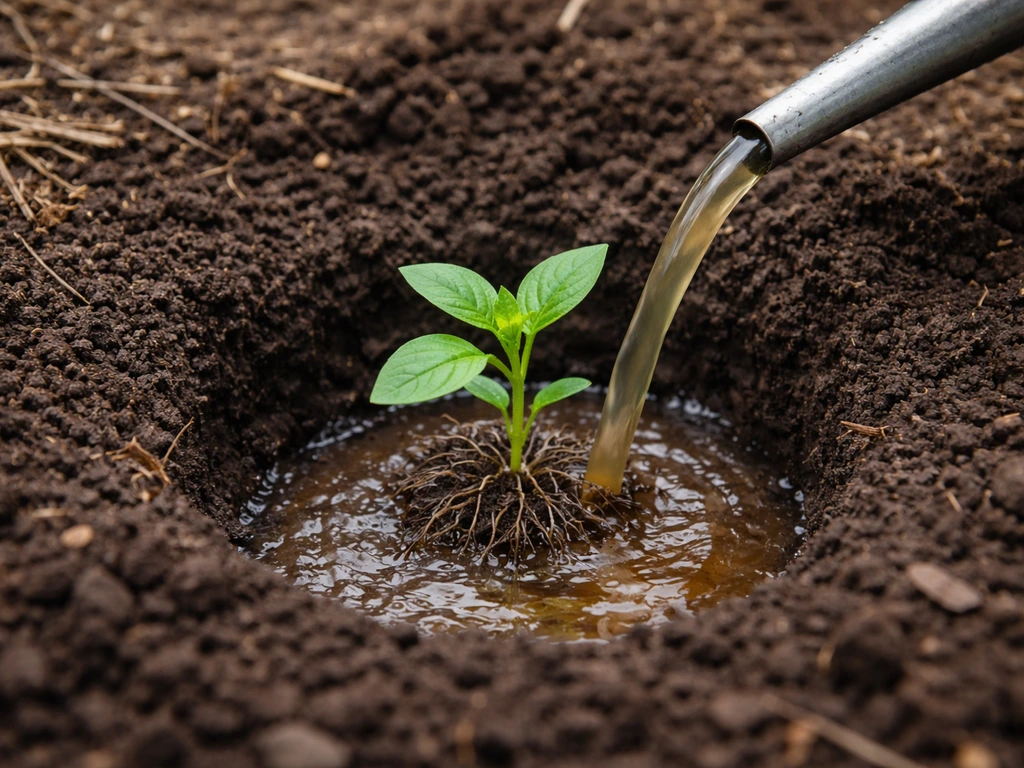
- Prepare the planting hole and set the plant in place
- Backfill the soil around the roots
- Immediately pour the measured amount of diluted solution (see dosing chart below) directly onto the soil and over the root zone
- Water the plant thoroughly after applying to push the solution down into the root zone — do not let it sit on the surface
For seeding (starting from seed in a bed or container)
- Sow seeds and cover them with soil as usual
- Immediately after covering, water the entire seeded area with diluted Root & Grow solution
- Use 1 gallon of diluted solution per 250 square feet of planting bed — for small seed-starting trays, scale that down proportionally
- Water thoroughly so the solution soaks into the soil where the seeds are sitting
For houseplants and container plants
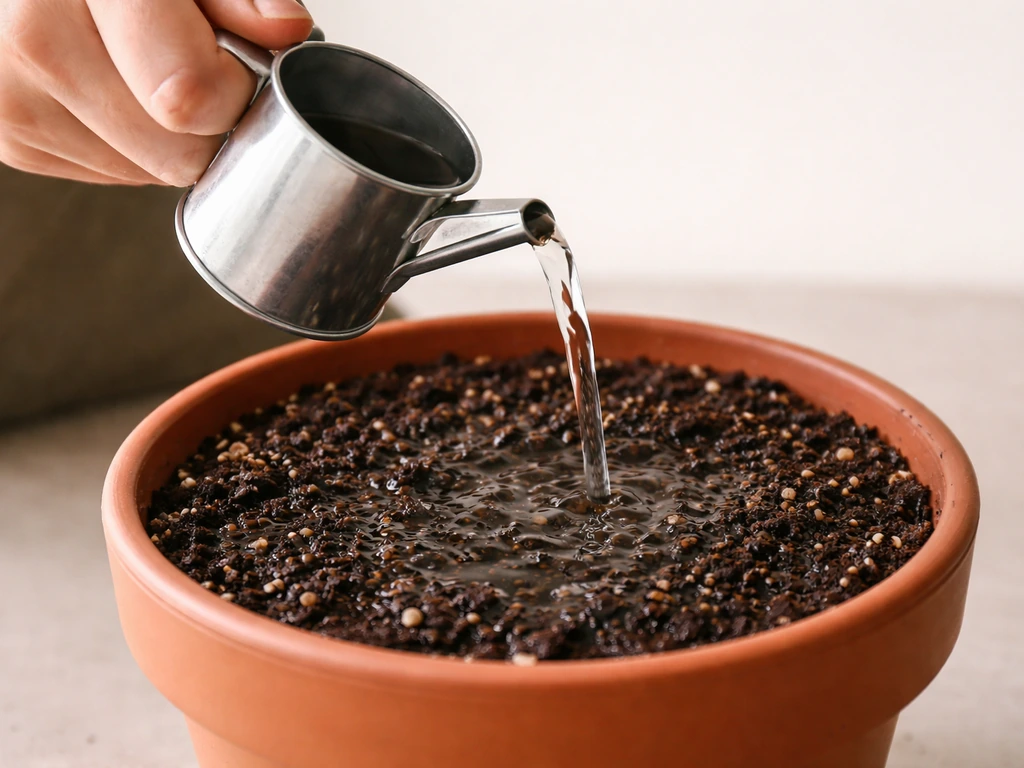
- Mix your diluted solution (3.5 tablespoons per gallon)
- Pour half a cup of diluted solution per quart of soil in the pot — a standard 6-inch pot holds about 1 quart, so that is roughly half a cup total
- Pour it evenly over the soil surface and let it drain through
- Reapply every 6 to 8 weeks during the growing season
How much to use and how to dilute it
Always mix Root & Grow concentrate before use. Never apply it straight from the bottle undiluted, more on why that causes problems in the troubleshooting section. Here is the dilution rate and per-plant dosing in one place:
| Situation | Dilution rate | Amount per plant/area |
|---|---|---|
| Standard mix (all uses) | 3.5 Tbsp concentrate per 1 gallon water (= 16 capfuls) | See below by plant type |
| Small annual flowers (mums, geraniums) | Same standard mix | 1 pint (2 cups) per plant |
| Medium shrubs | Same standard mix | 3 pints per plant |
| Large plants/trees (over 4 ft) | Same standard mix | 1 gallon or more per plant |
| Houseplants / containers | Same standard mix | 1/2 cup per quart of soil in pot |
| Seeded beds | Same standard mix | 1 gallon diluted solution per 250 sq ft |
The cap-based measurement (16 capfuls per gallon) is handy when you do not have a tablespoon measure nearby, but do not eyeball it. The concentration matters for how much IBA reaches the roots, too little and you get minimal benefit, too much and you risk damaging tender roots.
Timing and reapplication: when and how often
For transplants and new seedlings, the first application happens immediately at planting, that is when the roots need the most support. If you are also wondering how to use Umberto Giannini Grow Mask, follow the product label dosing and apply it in the same way your plant type needs, since instructions can differ from Root & Grow. After that, the schedule depends on what you are growing:
- Established outdoor plants (shrubs, ornamentals, fruiting plants): apply at the first signs of new growth in spring, then repeat every 4 to 6 weeks throughout the growing season
- Houseplants and container plants: reapply every 6 to 8 weeks
- New lawn seeding or sodding: apply once after seeding/sodding and water in thoroughly to reach the root zone; repeat as growth establishes
- Throughout the growing season: the label confirms you can continue applying during the season, not just at planting — this is useful for plants that seem slow to establish
A practical tip: mark your calendar or use a sticky note on your grow kit when you apply it. The 4-to-6-week window is easy to forget, especially when you are managing multiple containers or a full seed-starting setup. Consistency with reapplication is what separates steady root development from a one-and-done effect.
Troubleshooting: weak roots, no growth, and common mistakes
No visible root growth or very slow establishment
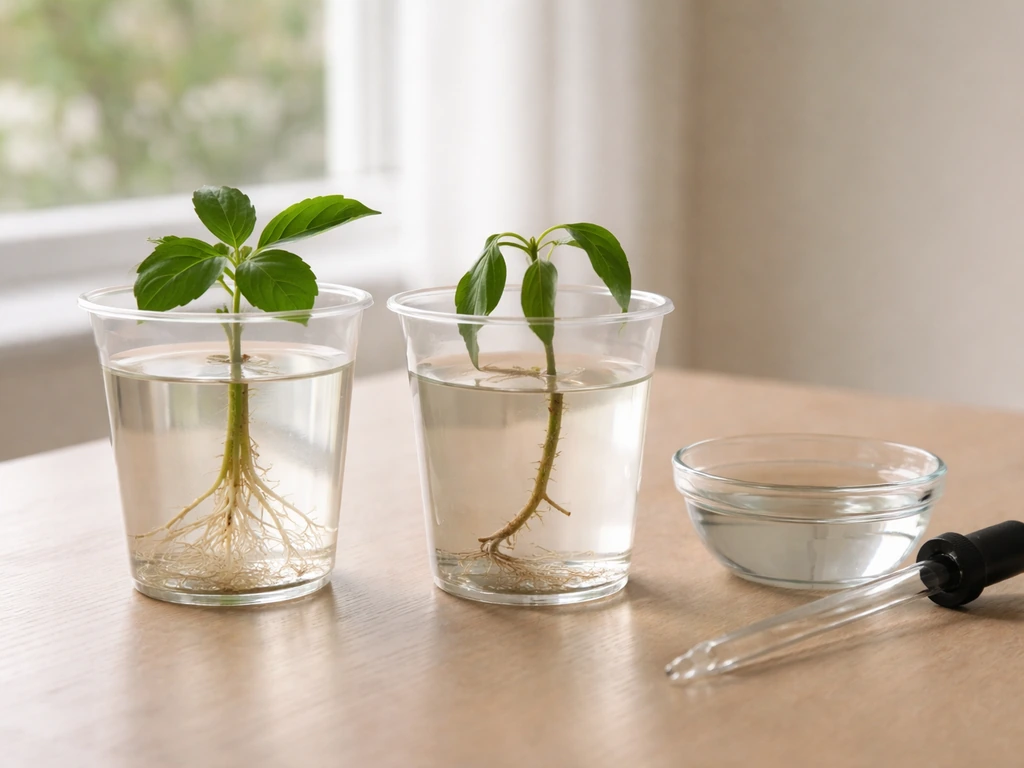
First, check your dilution. If you measured roughly or skipped the step entirely, the IBA concentration may be too low to trigger much of a response. Remix at the correct 3.5 tablespoons per gallon and reapply. Also check whether you watered in thoroughly after applying. Root & Grow needs to reach the actual root zone, which means it has to soak through the soil, not just sit on the surface. If your soil is compacted or very dry, the solution may not be penetrating.
Overuse: wilting, leaf edge burn, or root damage
Applying too much concentrate (or forgetting to dilute) is the most common mistake new users make. Root & Grow is a fertilizer as well as a root stimulator, so overdoing it can cause fertilizer burn at the roots. If you see wilting shortly after application, or the leaf edges look scorched, flush the soil with plain water to dilute what is there. Let the plant recover for a week or two before reapplying at the correct rate. Going back to basics with the standard dilution usually fixes the problem.
Stalled cuttings that are not rooting
Here is an important reality check: Root & Grow is not a rooting gel or powder for bare stem cuttings. If you are trying to root a cutting by soaking or dipping it into this solution and then expecting roots to emerge, you are using the wrong tool. The product is designed to be watered into soil at planting. For cuttings-based propagation, you would need a rooting hormone product designed for that method. Once a cutting is planted in growing medium, you can then use Root & Grow as a soil drench to support early root development, but it is not a substitute for a proper cutting-dip rooting hormone.
Confusion about mixing ratios
If the tablespoon measurement feels imprecise, use the capful method: 16 capfuls of concentrate per gallon of water equals the same 3.5 tablespoons. This is especially handy when mixing smaller batches. For a half-gallon of water, use 8 capfuls. For a quart, use 4 capfuls. Always mix concentrate into water, not the other way around, and shake the bottle before measuring to make sure the formula is evenly distributed.
Plant wilting right after transplant (transplant shock)
Some wilting after transplanting is normal regardless of whether you used a root stimulator. Root & Grow helps reduce transplant shock, but it is not instant. Keep the plant in appropriate light (not harsh direct sun right after transplanting), maintain consistent soil moisture, and give it a week to ten days to show signs of recovery. If it is still not perking up after two weeks, check the root zone for rot (which can happen if the soil stays waterlogged) or revisit whether you applied the solution correctly.
Safety, storage, and cleanup
Root & Grow is labeled as harmful if absorbed through the skin and can cause moderate eye irritation, so basic precautions matter here. Wear gloves when mixing and handling the concentrate, and avoid touching your face. If you get it on your skin, rinse immediately with plenty of water for 15 to 20 minutes. For eye contact, hold your eye open and rinse slowly and gently with water for 15 to 20 minutes; if you wear contacts, remove them after the first 5 minutes, then continue rinsing. It is always worth reading the first aid section on the label before you start working with any pesticide product.
For storage, keep the bottle upright in its original container in a locked storage area away from children and pets. Do not transfer it to other containers. If you have leftover diluted solution, do not pour it down any indoor or outdoor drain. Contact your local solid waste agency for disposal guidance on partly used containers. If the container is fully empty, it is non-refillable and non-reusable, place it in trash or check if your area accepts it for recycling.
Clean up your measuring tools and sprayer with water after use. If you were using a hose-end sprayer or pressure tank sprayer for a lawn application, flush the sprayer thoroughly before storing it. Wash your hands and any exposed skin with soap and water after the whole job is done, even if you wore gloves the whole time.
FAQ
Can I mix Root & Grow solution ahead of time and store the diluted mix for later?
Use Root & Grow only at planting, not as a pre-mixed “soak” for days. Mix fresh concentrate into water right before you plan to apply, and then use the diluted mix promptly, since IBA potency and uniformity can shift once it sits.
What should I do if I accidentally over-applied and the plant is wilting or scorched? Should I flush the soil?
Flushing means watering the soil with plain water until excess drains out the bottom (for pots) or until the root zone is diluted (for in-ground). Avoid another Root & Grow application until you see improvement, typically after 7 to 14 days, because re-dosing too soon can restart root burn.
After I water Root & Grow in, how should I manage light and watering for houseplants to avoid stress?
For indoor potted plants, place them where air circulation is good and light is bright but gentle for the first week, since sudden intense sun plus wet soil increases the risk of stress. Keep the soil evenly moist but not soggy, and allow excess water to drain so the root zone does not stay waterlogged.
Can I water Root & Grow into the same bed or area where other plants are growing, or do I need to keep it isolated?
If you’re treating both a new pot and nearby established plants, apply Root & Grow only to the target root zone. Do not splash or “drift” diluted solution onto other plants, because even a small overdosed area can cause fertilizer burn on sensitive plants.
I want to root cuttings, can I dip them in Root & Grow and then pot them?
Do not use it as a cutting dip. If your goal is bare stem cuttings, use a dedicated rooting gel or powder for dipping. Once those cuttings are established in medium, you can switch to Root & Grow as a soil drench to support early root development.
What’s the safest way to measure the concentrate if I only have caps or only have a teaspoon measure?
Measure concentrate from a shaken bottle and use one consistent method, either tablespoons or capfuls. If you mixed with the wrong unit (for example, fewer capfuls than intended), re-mix at the correct rate and discard the incorrect batch rather than trying to “top off” with extra water later.
If my soil is dry or compacted, how do I make sure the drench actually reaches the roots?
Root & Grow is a soil drench, so it matters whether the water reaches the root zone. If you applied to very dry or compacted soil, water lightly first to wet the soil, then apply the diluted drench so it soaks in rather than running off the surface.
My transplant is still struggling after two weeks, how do I troubleshoot whether it’s a root-zone problem or something else?
If you used the correct dilution and reapplication window but the plant still looks stuck after about two weeks, check for waterlogging and root issues first, then verify you provided adequate transplant aftercare. Yellowing and persistent droop can come from rot if the pot or bed stays saturated.
What should I do with leftover diluted Root & Grow after I’ve watered everything I planned to?
If you have leftover diluted solution, do not pour it into indoor or outdoor drains. Use up what you mixed on the labeled target plants the same day if possible, and for any remainder, follow your local hazardous waste or solid waste guidance instead of discarding it down plumbing.
Are there any extra safety steps I should take beyond gloves and eye protection when using Root & Grow?
Because it’s labeled harmful with skin absorption risk and can irritate eyes, wear gloves and protect your hands and face during mixing. If it gets on skin, rinse continuously for 15 to 20 minutes, then wash with soap and water, and do not resume handling plants until you are comfortable there is no lingering irritation.