
Most hatch and grow eggs work the same way: submerge the egg in room-temperature water (no hotter than 95°F / 35°C), leave it alone, and watch the shell soften or crack over the next 12 to 72 hours while the toy inside expands over several days. The catch is that 'hatch and grow' is a catch-all name covering two very different product types, whole-soak polymer eggs and crack-to-plant ceramic egglings, and the instructions are not interchangeable. This guide walks you through both, with model-specific notes so you know exactly which method applies to what you have in your hands.
Hatch and Grow Eggs Instructions: Step-by-Step Guide for DIY Kits

Marcus Thornfield
13 Jul 2026
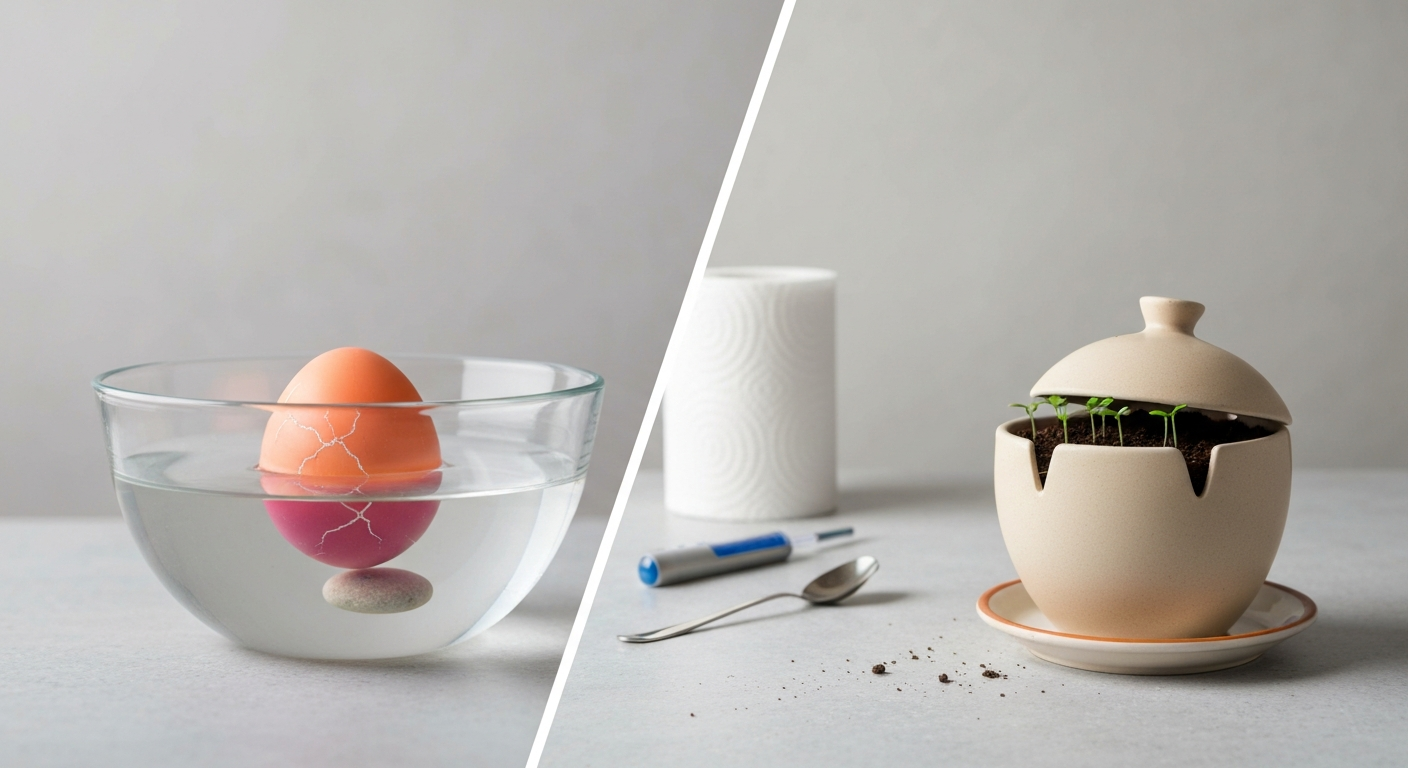
What hatch and grow eggs actually are
The phrase 'hatch and grow' covers a loose family of water-activated novelty kits sold under dozens of brand names. The majority are superabsorbent polymer toys: the egg shell (usually a thin coating of compressed powder or a dissolvable casing) dissolves or cracks in water, revealing a small polymer figure that swells as it absorbs water. The polymer is typically sodium polyacrylate, the same class of material found in garden crystals. A separate, less common type, the Eggling or Crack & Grow planter, is a ceramic eggshell filled with seed-starting soil. You crack the top open, water the soil, and grow a real plant. These are completely different products with completely different instructions, and mixing them up is the single most common source of confusion I see.
This guide is for parents, gift-buyers, hobbyists, and curious beginners who opened the box and found instructions that are either tiny, vague, or missing entirely. It covers all the main variants: Dino Surprise, Dragon Mystery, Eggling/Crack & Grow, Hatch N Grow, Mega/Super/Surprise Mega, and Unicorn grow eggs. If your kit is not listed by name, the universal steps and the cracking vs. whole-soak decision flow below will still get you sorted.
Safety first, read this before you open anything
Polymer hatch and grow eggs are not edible, not food, and not safe to ingest. This is not a boilerplate warning, it is a genuine medical risk. Superabsorbent polymer toys were subject to a CPSC recall as far back as April 2017 after swallowed eggs expanded inside children's GI tracts, causing intestinal obstruction that required surgery. The American Academy of Pediatrics documents intestinal obstruction and rare neurotoxicity after water‑bead ingestion in the report 'Intestinal Obstruction and Neurotoxicity Associated With Water Bead Ingestion | Pediatrics'. A federal safety standard for water-bead toys was approved in August 2025, and it exists precisely because ingestion is a documented, serious hazard. Clinical literature confirms these polymers are radiolucent (invisible on standard X-rays), which makes diagnosis harder and medical situations more serious.
If a child or pet swallows any part of a polymer hatch and grow egg, call Poison Control immediately at 1-800-222-1222 (US). Do not wait for symptoms. Signs of a problem include abdominal pain, vomiting, inability to pass stool, or choking. Get to an emergency room if symptoms appear.
- Age grade: most polymer hatch and grow eggs are labeled 4+ and carry a CHOKING HAZARD warning — not for children under 3 years.
- Supervision: children under 8 should not handle these unsupervised, especially during the soaking phase when shell pieces can break off.
- Skin and eyes: sodium polyacrylate can cause mild skin and eye irritation. Rinse skin with water after handling; flush eyes for at least 15 minutes and seek medical attention if irritation persists.
- Not edible: never applies to any model in this guide — polymer or ceramic plant version.
- Pets: keep soaking containers well out of reach of dogs and cats, who may drink the water or mouth the expanded figure.
- Drain disposal: do not pour dissolved polymer water down the drain. It can swell and clog pipes.
- Environmental disposal: do not release polymer water into gardens, waterways, or storm drains. Let spent polymer dry completely, then place in a sealed bag in the regular trash per local solid-waste regulations.
What to have ready before you start
- A clear bowl or container large enough to fully submerge the egg with at least 2 inches of water above it
- Room-temperature or lukewarm tap water — no hotter than 95°F / 35°C (warm bath temperature is a useful reference)
- A thermometer if you want to be precise, especially in hot-summer households
- A flat tray or plate with a lip for cracking models (Eggling/Crack & Grow)
- Paper towels for handling shell fragments
- A ruler or tape measure if you want to track growth progress
- A notebook or phone to log start time — timing matters more than most people expect
- For Eggling/Crack & Grow only: a bright windowsill, a watering can or small jug, and patience measured in weeks, not hours
Quick notes for each model
Before you get into the step-by-step, here is a fast-reference snapshot of the six main variants. Knowing which camp your egg falls into saves a lot of frustrated waiting.
| Model | Type | Method | Shell behavior | Typical growth timeline | Key quirk |
|---|---|---|---|---|---|
| Dino Surprise Grow Egg | Polymer toy | Whole-soak | Thin shell dissolves/cracks in water | Shell cracks: 12–24 hrs; full size: 3–7 days | JA-RU product; age grade 4+; figure expands inside water container |
| Dragon Mystery Grow Egg | Polymer toy | Whole-soak | Shell softens and splits in water | Shell cracks: 12–48 hrs; full size: 3–5 days | Impulse-brand (Five Below); same soak method as Dino Surprise |
| Eggling / Crack & Grow | Ceramic plant kit | Crack-and-plant | Ceramic top tapped off; soil inside | Sprout: 1–3 weeks; full growth: up to ~5 months (basil example) | Grows a real plant — completely different care from polymer eggs |
| Hatch N Grow | Polymer toy | Whole-soak | Shell dissolves gradually in water | Shell opens: 24–72 hrs; figure expands: days to weeks by SKU | Deluxebase/Keycraft brand; sizing varies significantly by SKU |
| Mega / Super / Surprise Mega Grow Egg | Polymer toy | Whole-soak | Shell cracks then figure swells large | Shell cracks: 12–24 hrs; max size: up to 7+ days | JA-RU Megga series; submerge fully; do not exceed 95°F water |
| Unicorn Grow Egg | Polymer toy | Whole-soak | Shell softens and peels/cracks in water | Shell opens: 24–48 hrs; full size: 3–6 days | Same polymer mechanism; figure may include color-change element |
The Eggling and Crack & Grow planter is the outlier here. If that is your kit, jump directly to Alternative Flow A below. Everything else on the list is a whole-soak polymer egg, and the rest of this guide applies to them in the same basic way.
Cracking vs. whole-soak: how to pick the right method
The decision is simpler than it looks. Ask yourself two questions: (1) Does my egg contain soil and seeds, or a small rubbery/foam figure? (2) Does the packaging say 'crack,' 'tap,' or 'break open' anywhere, or does it just say 'place in water'? If it contains soil and seeds, or says crack/tap, use the cracking method. If it contains a figure and says place in water, use the whole-soak method. The table above also tells you directly.
- Cracking method (Alternative Flow A): Eggling, Crack & Grow, and any ceramic planter egg — you physically break the top, expose the soil, and grow a plant over weeks to months.
- Whole-soak method (Alternative Flow B): Dino Surprise, Dragon Mystery, Hatch N Grow, Mega, Super, Surprise Mega, Unicorn, and most impulse-brand polymer eggs — the egg goes into water intact and the shell dissolves or cracks on its own.
A common mistake is physically cracking a polymer egg before soaking because the instructions seem unclear. Do not do this. The shell on polymer eggs is part of the experience, but more importantly, handling broken polymer pieces increases skin contact and the risk of small children putting fragments in their mouths. Let the water do the work.
Universal setup steps (applies to all models)
These steps apply regardless of model. The alternative flows below layer on top of these for each specific type.
- Wash your hands before and after handling the egg at any stage.
- Check your packaging for any model-specific warnings or inclusions you might have missed — some kits include a small tray, instructions card, or color-reveal element.
- Choose your container: it needs to be wide and deep enough to fully submerge the egg with water covering it completely. A large cereal bowl or a clear 1-quart container both work well.
- Fill with room-temperature or lukewarm water. For polymer eggs, aim for between 65°F and 90°F (18°C to 32°C). Cooler water slows expansion; water above 95°F (35°C) can damage the polymer.
- Note your start time. Write it on a sticky note or take a photo with your phone's timestamp. You will want this reference point when things seem slow.
- Place the container somewhere stable, out of direct sunlight (which can warm the water above the safe threshold), and well out of reach of children under 4 and pets.
- Do not stir, squeeze, or prod the egg during the early soak. I know it is tempting. Disturbing the shell before it is ready can cause uneven cracking or damage the figure inside.
Alternative Flow A: cracking models (Eggling and Crack & Grow)
The Eggling and Crack & Grow kits are a genuinely different experience from the polymer eggs. You are growing a real plant, not watching a polymer figure expand. Expect a timeline measured in weeks and months, not hours. The MoMA-stocked basil Eggling, for example, lists up to about five months to reach full growth. This is also the type most likely to be gifted to adults and older teens, so the age-grade concerns are less pressing here, though the ceramic shell shards are sharp and small children should still be supervised.
- Find a hard surface you do not mind tapping on — a countertop edge or the back of a spoon works well. Tap firmly around the scored line or the pointed top of the ceramic egg until the top piece cracks free. Remove it cleanly.
- Place the base of the egg on its included terracotta tray or a small saucer that will catch drainage water.
- Water the exposed soil thoroughly until water begins to drain out of the bottom drainage hole. Do not waterlog it — you want moist soil, not standing water in the tray.
- Set the egg in a bright spot near a window with indirect or direct light (check your included seed card for the specific plant's light preference). Basil wants bright light; some herb varieties tolerate indirect light.
- Water again whenever the top of the soil feels dry to the touch — usually every 1 to 3 days depending on your home's temperature and humidity.
- Expect sprouts in roughly 1 to 3 weeks. If nothing has appeared after 3 weeks, check that the soil has stayed consistently moist and that the egg has received enough light.
- Once seedlings are a few centimeters tall and the egg is getting tight, you can gently transplant them into a larger pot with fresh potting mix to continue growth.
Alternative Flow B: whole-soak models (Dino Surprise, Dragon Mystery, Hatch N Grow, Mega/Super/Surprise Mega, Unicorn)
This is the method for every polymer egg on the list. For step-by-step Unicorn grow egg instructions, see the Unicorn-specific guide. For step-by-step Surprise Mega Grow Egg instructions, see the dedicated guide on this site. The process is satisfying once you know what to expect at each stage, but the first 12 hours can feel like nothing is happening. Retail listings such as blank" rel="noopener noreferrer">Hatch ‘N’ Grow – Shark – Deluxebase Store note these Hatch ’N’ Grow kits use a water‑activated hatch-and-grow mechanism and instruct customers to place the egg in water and wait for gradual expansion over hours to days. That is normal.
- Prepare your container and fill it with room-temperature water as described in the universal steps. For JA-RU Mega/Megga models specifically, the official directions state not to exceed 95°F / 35°C — lukewarm tap water is ideal.
- Fully submerge the egg. The entire egg should be under water, not just sitting in a shallow puddle. If it floats, weigh it down gently with a small clean stone or a filled zip-lock bag of water placed on top.
- Leave it alone for the first 12 hours. The shell will begin to soften, develop hairline cracks, or show swelling from underneath. For Dino Surprise and JA-RU Mega models, visible cracking typically starts between 12 and 24 hours in.
- After the shell begins to open, you may see the figure inside starting to swell. Keep the water topped up so the figure stays fully submerged — evaporation can slow growth noticeably, especially in dry homes.
- Change the water every 24 to 48 hours if it becomes cloudy or discolored. Some shell coatings release color or residue, which is normal but worth refreshing for cleanliness.
- The figure will continue to grow for several days after the shell fully opens. Hatch N Grow models from Deluxebase/Keycraft note that expansion can take days to weeks depending on the SKU, so do not declare failure too early.
- Once the figure has reached its full size, you can remove it from the water. It will gradually shrink back down if left out of water (this is the rebound cycle — see below), and you can re-soak it to re-expand it multiple times.
The rebound cycle: shrink, re-soak, repeat
One thing the packaging rarely explains clearly: polymer figures do not stay expanded permanently. When you take the figure out of water, it slowly dehydrates and shrinks back toward its original size over a day or two. This is not damage or failure. You can drop it back in clean water and it will re-expand, usually reaching full size faster the second time (often within 24 hours). Most figures can cycle through this process many times before the polymer starts to degrade. When the figure becomes sticky, develops a slimy film, or smells off, it is time to dispose of it. Let it dry fully, place in a sealed bag, and put in the regular trash.
Expected growth timeline
| Stage | Polymer whole-soak eggs | Eggling / Crack & Grow (plant) |
|---|---|---|
| First visible change | Shell softening or hairline cracks: 6–12 hours | Nothing visible above soil: 0–7 days |
| Shell open / sprout emerging | Shell cracked open: 12–48 hours (most models) | First sprout above soil: 7–21 days |
| Figure at 50% full size | 2–4 days from start | Seedling 2–5 cm tall: 2–4 weeks |
| Figure at full size | 3–7 days (standard); up to 7+ days for Mega/Super variants | Full-grown plant: 4–20 weeks depending on species |
| Rebound after drying | Re-expands to full size in 12–24 hours on second soak | N/A — plant is permanent once growing |
Troubleshooting: when things go sideways
Most problems with polymer eggs come down to water temperature, water depth, or impatience. Most problems with Egglings come down to inconsistent watering or too little light. Here is a quick-reference chart.
| Symptom | Likely cause | Fix |
|---|---|---|
| Shell not cracking after 24+ hours (polymer egg) | Water too cold, egg not fully submerged, or unusually thick shell coating | Warm water slightly (keep under 95°F), ensure full submersion, wait another 12–24 hours |
| Figure growing very slowly | Cool water temperature or low water level from evaporation | Top up water, move to slightly warmer (not hot) location, ensure full submersion |
| Water turned a strange color (pink, blue, yellow) | Shell dye releasing into water — normal for many models | Change the water with fresh room-temp water; color in water is not harmful but looks alarming |
| Figure feels sticky or slimy after repeated soaks | Polymer degradation after multiple cycles | Dispose of figure: dry fully, seal in bag, put in trash |
| Figure crumbling or tearing | Polymer dried out too quickly between soaks, or water was too hot | Too-hot water damage is irreversible; slow drying can sometimes be reversed with a 24-hour re-soak in cool water |
| No sprout after 3+ weeks (Eggling) | Soil dried out, insufficient light, or seed viability issue | Ensure soil stays consistently moist; move to brighter spot; some seeds need warmth above 65°F to germinate |
| Eggling soil going moldy | Overwatering or poor air circulation | Reduce watering frequency; remove mold with a clean spoon; improve airflow around the egg |
| Figure will not shrink back down / stays soft out of water | Normal behavior — polymer retains water; just takes longer in humid conditions | Leave in open air 24–48 hours; a fan nearby speeds drying |
Post-hatch care and display
Once your polymer figure has fully expanded, you have a few display options. If you want to keep it at full size for display, store it in a sealed container with a small amount of water, enough to keep it hydrated without full submersion. Change that water every few days to prevent bacterial growth. If you want to store the figure long-term, let it dehydrate fully (which takes 24 to 48 hours in open air), then store the shrunken figure in a dry zip-lock bag. It will re-expand reliably when you next soak it, assuming the polymer is still in good condition.
For Eggling plants, once the seedlings outgrow the ceramic shell, transplant carefully into a 3- to 4-inch pot with fresh potting mix. Herbs like basil and lavender (common Eggling inclusions) do well in a sunny windowsill with regular watering. At that point, you are just growing a normal herb, and the egg has done its job.
Storage and disposal done right
Disposal is one area where the packaging is almost always silent, and it actually matters. Sodium polyacrylate polymer should not go down the drain, even a small amount can absorb water in pipes and cause blockages. Do not pour the soaking water down the sink if it contains dissolved shell material or polymer residue. Instead, let the water sit in an outdoor container until the polymer settles, then pour off the clear water slowly, let the polymer residue dry completely, and dispose of the solid material in a sealed bag in the regular trash. Incineration or landfill disposal per local regulations is the guidance from material safety data sheets for this class of polymer.
When to contact the manufacturer
If your egg arrived damaged, the figure inside is missing, or the product does not behave as described even after following the steps here, it is worth contacting the manufacturer rather than just buying a replacement. For JA-RU products (Dino Surprise, Mega/Megga Grow Egg, and related lines), the company's support line is 1-800-231-3470 (toll-free) or 1-904-733-9311. Their contact page also lists a general email address. For Deluxebase/Keycraft products including Hatch N Grow, check the retailer where you purchased first, as Deluxebase distributes through retail partners who typically handle warranty returns. For detailed hatch n grow instructions, check the manufacturer's Hatch N Grow support or the retailer where you bought the kit. For impulse-brand eggs like Dragon Mystery (sold at Five Below), returns are usually handled at the retail store level.
If you ever have a safety concern, not just a product defect, but a situation where a child may have swallowed part of the egg or gotten polymer material in their eyes, skip manufacturer contact entirely and call Poison Control at 1-800-222-1222 or go to an emergency room.
More grow egg guides on this site
Each model in this family has its own quirks worth knowing in detail. If you are specifically working with a Dino Surprise grow egg, a Dragon Mystery grow egg, an Eggling Crack and Grow planter, a Hatch N Grow kit, a Mega or Super grow egg, a Surprise Mega grow egg, or a Unicorn grow egg, there are dedicated model-specific walkthroughs on this site that go deeper into those individual products, including brand-specific timing data, exactly what the figure looks like at each growth stage, and any model-unique troubleshooting steps. Head to the relevant guide for your exact kit if you want that level of detail. For Super Grow Eggs instructions, see the Super Grow Eggs guide for model-specific steps and troubleshooting. For Mega Grow egg instructions, see our dedicated Mega Grow guide.
FAQ
What primary authoritative sources should I consult when writing a model‑aware, beginner guide for hatch‑and‑grow eggs?
Use: (1) manufacturer product pages and printed instructions for each SKU (JA‑RU, Deluxebase/Keycraft, retail pages) for model‑specific setup, timing and age labels; (2) CPSC guidance and recall notices for regulatory and safety context (water‑beads/water‑absorbing toys, label/warning requirements); (3) SDS/MSDS for sodium polyacrylate or other listed superabsorbent polymers for handling, first aid, cleanup and disposal; (4) poison‑control/medical guidance and peer‑reviewed clinical literature documenting ingestion risks and symptoms (AAP/Pediatrics, clinical case reports); (5) manufacturer contact/support pages for returns/warranty instructions. Examples: JA‑RU product/contact pages, Deluxebase store pages, CPSC water‑bead guidance and recall pages, SDS for sodium polyacrylate, Poison Control 1‑800‑222‑1222.
Concise supplies checklist needed to hatch and grow most toy eggs safely
Essential: clear container or cup (tall enough to fully submerge egg for soak models), room‑temperature tap water, kitchen thermometer (optional, to avoid >35°C/95°F), timer or clock, paper towel or tray for drying, gloves (optional if you have sensitive skin), scissors (for packaging), child supervision. Optional: magnifying glass/camera for observing, small display stand, towel to protect surfaces. For cracking‑top planter type (Eggling/Crack & Grow) add: shallow saucer/terracotta tray, small potting soil (if included), seed packet, sunlight/bright window access.
Universal step‑by‑step procedure (single flow) for full‑soak water‑activation eggs
1) Read the SKU’s printed directions and age warnings. 2) Place a clean clear container on a flat surface; fill with enough cool/room‑temperature water to fully cover the egg (do not exceed ~95°F/35°C). 3) Submerge the egg fully and start a timer. 4) Check every 6–12 hours for shell swelling/cracks; avoid stirring or squeezing the egg. 5) Once the shell cracks and the toy begins emerging, leave it in water until it reaches near‑final size (see timeline). 6) Remove toy carefully, drain excess water on paper towel, and place on a drying/tray to finish expansion if needed. 7) Dispose of leftover water per local instructions (do not pour large quantities of polymer into drains). 8) Supervise children; do not allow mouthing or ingestion.
Alternative flow: cracking‑top or planter (Eggling / Crack & Grow) models
1) Tap or gently crack the ceramic/egg top according to the included instructions (some require breaking the top with a spoon). 2) Place cracked top on the terracotta base/soil and add included soil and seeds if required. 3) Water thoroughly until soil is damp but not waterlogged; place on the saucer as instructed. 4) Keep in a bright spot; maintain soil moisture per instructions (check daily until germination). 5) Follow plant care (thin seedlings, transplant if needed). Note: these are not superabsorbent polymer toys and have plant‑safety/seed care timelines (weeks to months).
Model‑specific notes for common hatch‑and‑grow variants
Dino Surprise / Dino Grow (JA‑RU style): full‑soak eggs, age 4+, typically begin to crack 12–24 hrs; final size varies by SKU. Dragon Mystery (retail impulse brands): similar full‑soak behavior; watch manufacturer timing. Hatch ’N’ Grow / Deluxebase: soak models with vendor timing often quoted as days to weeks depending on size. Hatch N Grow Mega / Super / Surprise Mega: larger polymer cores — expect slower initial crack (24–72 hrs) and longer final expansion (several days). Unicorn variants: same mechanism; pastel dyes may cause surface discoloration if pigment bleeds. Eggling / Crack & Grow: planter/seed kit — different procedure (crack top, water soil), weeks‑to‑months growth timeline. Always check SKU box for exact starting instructions and age warnings.
Typical growth timeline and expected sizes (general guidance)
Time to first crack: most small/standard soak eggs 12–48 hours; medium/mega eggs 24–72 hours. Noticeable expansion: within 24–72 hours. Near‑final size: 2–7 days for standard toys; Mega/Super sizes may take up to 7–14 days. Final dimensions (typical ranges): Small novelty eggs: 1–3 in / 2.5–7.5 cm; Standard toys: 3–6 in / 7.5–15 cm; Mega toys: 6–12 in / 15–30 cm. Plant‑type Eggling kits: germination 3–14 days (species dependent), substantial growth over weeks–months. Use manufacturer label for exact SKU expectations.