
Apply the Umberto Giannini Grow Mask to damp hair after shampooing, smooth it from mid-lengths to ends, leave it for anywhere between 3 and 15 minutes depending on how your hair feels, then rinse thoroughly. That is the whole core method. Everything else, how much to use, how often, what to pair it with, and what to realistically expect, is what this walkthrough covers in full.
How to Use Umberto Giannini Grow Mask: Step-by-Step Guide

Marcus Thornfield
12 Jul 2026
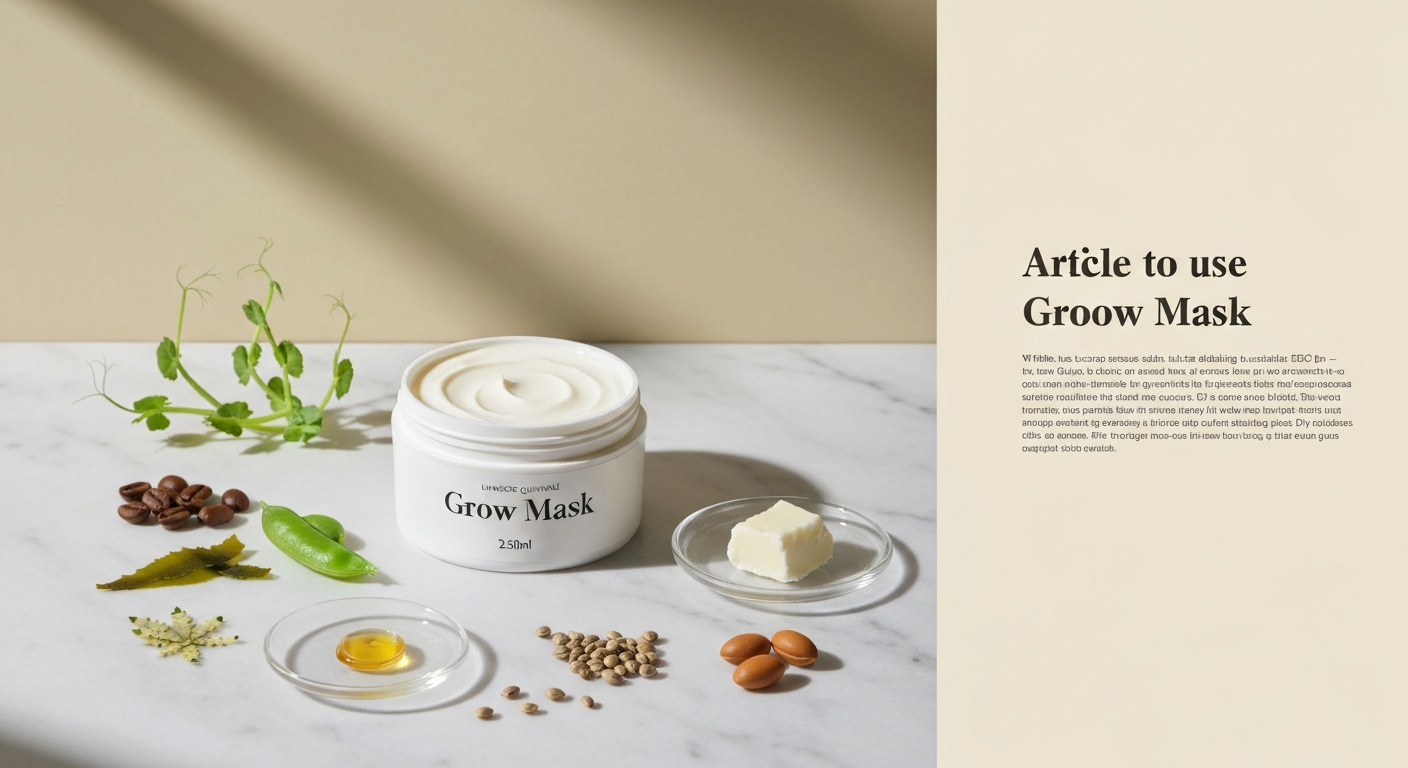
Quick decision: Is the Umberto Giannini Grow Mask right for you?
Before you open the tub, it helps to know whether this product is actually suited to your situation. It is a rinse-out deep conditioning mask with plant-based actives, not a pharmaceutical hair treatment. Here is a quick checklist to help you decide.
- You have dry, damaged, or breakage-prone hair and want a conditioning treatment with extra botanical actives
- You are comfortable using a rinse-out mask once or twice a week as part of a regular routine
- You want something vegan and free from sulfates in the formula itself
- You understand this is a cosmetic product, not a medical treatment for clinical hair loss
- You do not have a known allergy to wheat, coconut, or fragrance (parfum is listed in the ingredients)
- You are not expecting overnight results — you are committing to several weeks of consistent use
- You are not planning to use it as a standalone solution if you have significant thinning caused by a medical condition
If most of those fit you, carry on. If you have diagnosed alopecia or significant hair loss with a medical cause, this mask can still be a useful part of your hair care, but it should sit alongside advice from a dermatologist or trichologist, not replace it.
What the Umberto Giannini Grow Mask is and what it promises
The Umberto Giannini Grow Mask is a deep-conditioning treatment mask sold in a 230ml tub. It sits in the brand's 'Grow' product line, which is built around a 'Caffeine Gro-Complex', a blend of caffeine, black coffee seed extract (Coffea Arabica and Coffea Robusta), pea sprout extract, and seaweed/marine nutrients including carrageenan, bladderwrack (Fucus vesiculosus), and sea kelp (Laminaria digitata). The brand's promise is to strengthen, repair, and moisturise hair while the botanical actives support the scalp environment. It is fully vegan and the formula includes hemp seed oil, coconut oil, and shea butter alongside the grow-focused actives.
One thing worth being clear about upfront: this is a cosmetic product, not a licensed hair-regrowth drug. The conditioning base will genuinely improve the feel, manageability, and appearance of your hair. The active botanical ingredients have some supportive science behind them, but the clinical evidence is limited, especially compared to approved pharmaceutical options. The MDPI review 'An Updated Etiology of Hair Loss and the New Cosmeceutical Paradigm in Therapy: Clearing ‘the Big Eight Strikes’' notes that cosmeceutical actives (peptides, plant extracts) have mechanistic/preclinical support but generally weaker clinical evidence than pharmaceutical treatments An Updated Etiology of Hair Loss and the New Cosmeceutical Paradigm in Therapy: Clearing ‘the Big Eight Strikes’ (MDPI review on cosmeceutical actives vs clinical therapies). More on that when we get to the results timeline.
Ingredients and claimed benefits, how to read the label and what to expect
INCI ingredient lists run from highest to lowest concentration, so the ingredients at the top of the list make up the bulk of the product. Here is how the Grow Mask's key ingredients break down and what they actually do.
| Ingredient (INCI name) | Plain English name | What it does |
|---|---|---|
| Aqua | Water | Base/solvent |
| Cetearyl Alcohol | Fatty alcohol | Conditioning agent, thickener — smooths the hair cuticle |
| Glycerin | Glycerin | Humectant — draws moisture into the hair shaft |
| Cocos Nucifera Oil | Coconut oil | Penetrating oil — reduces protein loss and improves softness |
| Behentrimonium Chloride / Cetrimonium Chloride | Quaternary ammonium conditioners | Detanglers — reduce combing force and static, deposit onto hair surface |
| Butyrospermum Parkii | Shea butter | Emollient — seals moisture, adds slip |
| Cannabis Sativa Seed Oil | Hemp seed oil | Lightweight emollient — adds softness without heavy residue |
| Simmondsia Chinensis Seed Oil | Jojoba oil | Emollient/sealant — mimics scalp sebum |
| Argania Spinosa Kernel Oil | Argan oil | Adds shine and smoothness |
| Caffeine + Coffea Arabica/Robusta Seed Extract | Caffeine / coffee extracts | Brand's core 'grow' active — some clinical data for scalp stimulation, evidence is mixed |
| Triticum Vulgare Bran Extract | Wheat bran extract | Strengthening/conditioning protein extract — not suitable for wheat-allergic users |
| Piroctone Olamine | Piroctone olamine | Antifungal/anti-dandruff active — improves scalp condition |
| Chondrus Crispus Extract / Fucus Vesiculosus / Laminaria Digitata | Carrageenan / bladderwrack / sea kelp | Marine nutrients — conditioning and scalp-soothing claims |
| Maris Sal | Sea salt | Scalp-environment mineral |
| 2-Bromo-2-Nitropropane-1,3-Diol (bronopol) | Bronopol | Preservative — formaldehyde-releasing; small allergy risk in sensitive individuals |
A few things to call out specifically. The quaternary ammonium conditioners (behentrimonium chloride and cetrimonium chloride) combined with the fatty alcohols are what deliver the immediate detangling and softness you feel after every use, that is well-established conditioning chemistry. The caffeine actives have biological plausibility and some clinical trial data supporting modest benefits in scalp treatments, but the evidence is mixed and nowhere near as strong as approved drug treatments. The pea sprout extract (listed under marketing as an active but not individually named in the INCI above, it may appear as 'organic pea sprout extract' depending on the batch) has a small body of clinical research showing it can influence hair growth genes (FGF7, noggin) in limited pilot studies. Piroctone olamine is a genuinely functional antifungal that addresses scalp health, which can indirectly support a better environment for hair growth.
One ingredient to flag for sensitive skin: bronopol (2-bromo-2-nitropropane-1,3-diol) is a preservative that belongs to the formaldehyde-releasing family. It is used within regulatory limits and is assessed as safe at approved concentrations, but a small number of people develop contact allergy to it. See Amended Safety Assessment of 2‑Bromo‑2‑Nitropropane‑1,3‑Diol (bronopol), CIR (Cosmetic Ingredient Review) documents for the panel's safety conclusions, regulatory concentration guidance, and reported contact-allergy cases blank" rel="noopener noreferrer">Amended Safety Assessment of 2‑Bromo‑2‑Nitropropane‑1,3‑Diol (bronopol) — CIR (Cosmetic Ingredient Review) documents. If you have a history of contact dermatitis from hair products, it is worth doing a patch test before full application. If you have a known wheat allergy or sensitivity, note the wheat bran extract in the formula too.
Step-by-step application: how much to use, where to apply, timing and rinse guidance
The official direction is refreshingly simple: smooth through damp hair, let sit for your desired time, rinse when hair feels renewed. But there is a bit more nuance worth knowing to actually get the best from it.
- Shampoo first. Use your regular shampoo and rinse fully. The mask is designed to go onto freshly cleansed, damp hair — not dry hair, and not hair that still has conditioner from a previous step on it.
- Squeeze out excess water. Your hair should be damp, not dripping wet. Too much water dilutes the mask and reduces how well it deposits onto the hair shaft.
- Scoop out the right amount. For short hair, a 10p-coin-sized amount is usually enough. For shoulder-length hair, think a heaped dessertspoon. For long or thick hair, you may need two generous scoops. Use less than you think you need to start — you can always add more.
- Apply from mid-lengths to ends first. This is where hair tends to be most damaged and porous. Work the product through with your fingers or a wide-tooth comb.
- If you want to include the scalp, keep the time short. The official instructions do not specify scalp use, but some users apply a small amount to the scalp for 3 to 5 minutes before rinsing. If you try this, rinse thoroughly to avoid residue. Given the conditioning agents in the formula, leaving product sitting heavily on the scalp for extended periods can contribute to buildup.
- Leave on for 3 to 15 minutes. The brand's wording ('rinse when hair feels renewed') means you have flexibility. For a quick midweek boost, 3 to 5 minutes is fine. For a deeper treatment session, leave it on for 10 to 15 minutes. You can cover with a shower cap to add gentle heat, which helps the conditioning agents absorb better.
- Rinse thoroughly with lukewarm water. Make sure no product is left on the hair, especially at the roots and scalp. Residue is the most common cause of greasy or heavy-feeling results.
- Do not use as a leave-in product. Retailer pages and the brand consistently instruct rinsing. The formula contains conditioning ingredients that are designed for rinse-out use and can cause buildup if left in.
Pairing the mask with shampoos, conditioners, serums and styling products
Hair care products work best in the right order, and using the Grow Mask out of sequence can actually undercut its effectiveness. Here is the order of use that makes the most sense with this product.
- Pre-shampoo oil treatment (optional): if you use a scalp or hair oil treatment, apply that to dry hair before getting in the shower, leave for 20 to 30 minutes, then shampoo it out.
- Shampoo: cleanse your hair and scalp as normal. The Umberto Giannini Grow Shampoo from the same line pairs logically here, but any gentle shampoo works.
- The Grow Mask: apply to damp post-shampoo hair. This is your deep conditioning step. On days you use the mask, you generally do not need a separate rinse-out conditioner — the mask covers that function.
- Rinse the mask out fully.
- Scalp serum or growth serum (optional): leave-in scalp serums or drops (including Umberto Giannini's own Grow Serum if you use it) go on after rinsing the mask. Apply to the scalp and do not rinse.
- Leave-in conditioner or detangling spray (optional): if your hair needs extra slip, a lightweight leave-in can go on next, applied to lengths and ends.
- Styling products: oils, creams, mousses, and gels go last, after all treatments are applied.
A note on professional salon services: if you have a colour, bleach, or chemical treatment booked, avoid using an intensive at-home mask on the same day. Heavily conditioned hair can interfere with how colour deposits or how chemical services perform. Check with your stylist if you are unsure, this applies to any deep conditioning mask, not just this one.
Recommended frequency and where it fits in a weekly routine
Once or twice a week is the standard guidance for intensive conditioning masks, and the Grow Mask fits that pattern. If your hair is very dry, heavily damaged, or colour-treated, starting at twice weekly for the first month is reasonable. If your hair is fine or tends to go limp easily, once a week (or even once every ten days) will give you the conditioning benefit without the product starting to weigh your hair down.
Here is what a practical weekly routine might look like for someone with medium-length, moderately dry hair:
| Day | Steps |
|---|---|
| Monday (wash day 1) | Shampoo + Grow Mask (5–10 min) + scalp serum after rinsing |
| Wednesday or Thursday (wash day 2) | Shampoo + lightweight rinse-out conditioner only (skip mask) |
| Saturday (wash day 3) | Shampoo + Grow Mask (10–15 min, deeper treatment) + scalp serum after rinsing |
| Any day | Styling products and leave-in as needed — no additional mask |
If you only wash your hair once or twice a week, simply use the mask on one of those wash days and a lighter conditioner on the other. You do not need to wash more often just to use this product more frequently.
Realistic results timeline: when you may see less breakage, thicker-looking hair or length change
This is where I want to be genuinely honest with you, because a lot of 'grow' product marketing sets expectations that the science does not quite support.
You will likely notice improved softness, manageability, and reduced breakage on combing within the first one to three uses. That is the conditioning base doing its job, the fatty alcohols and quaternary conditioners smooth the cuticle, and the oils add moisture and elasticity. This is real and noticeable, and it matters because reduced mechanical breakage is one of the ways hair can appear to grow longer faster (it is not growing faster, but less is breaking off).
For any potential effect from the botanical actives (caffeine, pea sprout extract, marine ingredients) on the scalp or follicle environment, you are looking at a longer timeframe. Clinical trials for hair growth actives generally run for three to six months before meaningful changes in hair density or growth rate are assessed. Even pharmaceutical treatments like minoxidil, which have far stronger clinical evidence than any cosmetic mask, typically take three to six months to show visible results. Set your expectations accordingly.
| Timeframe | What you might realistically notice |
|---|---|
| After 1–3 uses | Softer, more manageable hair; easier detangling; reduced snap during brushing |
| Weeks 2–4 | Hair may feel less dry between washes; scalp may feel calmer if dandruff was mild (piroctone olamine effect) |
| Months 1–3 (consistent use) | Retained length from reduced breakage; hair may appear thicker in texture and body |
| Months 3–6+ | Any potential follicle-level benefit from botanical actives, if present, would become detectable here — but this is not guaranteed |
If you are dealing with significant hair loss or thinning, a conditioning mask is a supportive addition to your routine, not a primary treatment. The Grow Mask contains actives with some mechanistic and limited clinical backing, but it is a cosmetic product. If hair loss is a serious concern for you, a conversation with a dermatologist or trichologist about options including topical minoxidil (which has proper randomised controlled trial evidence) is worth having alongside using products like this.
Troubleshooting common problems: greasy hair, scalp irritation, and no visible results
Hair feels greasy or heavy after use
This is the most common complaint with conditioning masks, and it almost always comes down to one of three things: too much product, not rinsing thoroughly, or applying too close to the roots on fine hair. Try halving the amount you use and spending an extra 30 seconds rinsing under running water. If your hair is fine or low-porosity, keep the mask strictly on mid-lengths and ends and avoid the scalp entirely. You can also reduce frequency to once every ten days rather than weekly.
Scalp irritation, redness, or itching
Stop use immediately if you develop redness, burning, or persistent itching after using the mask. Wash the product off fully with lukewarm water. The most likely culprits in this formula for contact reactions are the fragrance (parfum), bronopol (the formaldehyde-releasing preservative), or the wheat bran extract. If symptoms are mild and resolve quickly, you can try patch testing a small amount on your inner forearm for 24 hours before using it again. If symptoms are significant, persist, or involve swelling or a rash, see a doctor or dermatologist rather than self-managing. Do not continue using a product that is causing irritation on the assumption it will settle down.
No visible results after several weeks
First, check whether you are actually expecting something the product cannot deliver. If your hair feels better (softer, less brittle, easier to comb), the product is working, you may just be hoping for something beyond what a conditioning mask can do. If you genuinely see no improvement in hair feel or manageability after four to six weeks of consistent twice-weekly use, there are a few things to consider. Your hair may need a clarifying shampoo first to remove buildup before the mask can deposit effectively. Or the formula may simply not be the right match for your hair porosity, very low-porosity hair sometimes responds better to lighter, liquid-based treatments than thick creamy masks.
When to adjust dose or frequency
- Reduce amount used if hair feels heavy or greasy
- Reduce frequency to once weekly (or less) if hair starts to feel limp between washes
- Increase leave-on time (up to 15 minutes) if hair still feels dry after rinsing
- Add a shower cap during the sitting time if you want better absorption without increasing the amount of product
- Do a clarifying wash before your next mask session if you suspect product buildup from previous applications
When to stop use
Stop use and consult a professional if you experience any allergic reaction (redness, swelling, persistent itching or burning), if your hair shedding increases noticeably after starting the product, or if scalp irritation does not clear up within a day or two of stopping. These are not normal adjustment reactions, they are signals that this specific formula is not right for you.
How the Grow Mask compares to other 'grow' and root-stimulator products
Because this site covers a wide range of grow kits and growth products, it is worth a clear note: the Umberto Giannini Grow Mask has nothing to do with plant root stimulators or horticultural grow products. If you landed here looking for instructions on something like a root-and-grow liquid for cuttings or a plant growth stimulator, that is a completely different category, the word 'grow' is simply part of the hair care brand's naming. If you intended plant care guidance instead, see the root and grow root stimulator instructions for how to use horticultural root stimulators. If you actually meant plant rooting products, see our guide on how to use Roots Organic Uprising Grow for step-by-step instructions on applying rooting hormone and caring for cuttings. If you need root and grow instructions for plant cuttings or horticultural rooting products, see our dedicated root and grow instructions guide for step-by-step help. If you meant plant products, see our garden rich root and grow instructions for guidance on using rooting hormones and nutrient solutions for cuttings. Those plant-focused products work on an entirely different mechanism (auxins, rooting hormones, nutrient solutions) and are covered separately. For specific guidance on using a product like that, see the Garden Reach 'Root and Grow' instructions.
Within hair care, comparing the Grow Mask to other 'growth-focused' hair products is useful because the market is crowded with very different approaches.
| Product type | Key actives | Mechanism claimed | Evidence strength | Best suited for |
|---|---|---|---|---|
| Umberto Giannini Grow Mask | Caffeine, pea sprout extract, seaweed, piroctone olamine, conditioning base | Conditioning + scalp environment support | Moderate for conditioning; limited for follicle growth | General hair care with growth-supportive actives |
| Peptide-complex serums (Redensyl, Procapil, Capixyl) | Biotinoyl tripeptide, DHQG, EGCG | Follicle signalling/stem cell activation | Promising preclinical; limited robust clinical trials | Targeted scalp serums for thinning concerns |
| Topical minoxidil (pharmaceutical) | Minoxidil 2–5% | Vasodilation, prolongs anagen phase | Strong (multiple large RCTs) | Clinically diagnosed hair loss (speak to a doctor) |
| Standard deep conditioning masks | Fatty alcohols, silicones, oils | Cuticle smoothing, moisture retention | Strong for condition improvement; no growth evidence | Dry, damaged, or chemically treated hair |
The Grow Mask sits between a standard conditioning mask and a targeted scalp treatment. Its conditioning base is well-formulated and genuinely effective for hair health. The botanical actives are a bonus with some scientific rationale, but they are not the reason to buy it if your primary concern is significant hair loss. Think of it as an excellent conditioning mask that also supports scalp health, rather than a hair regrowth treatment.
Storage, shelf life, and buying tips
Store the tub in a cool, dry place away from direct sunlight and shower steam when not in use. Most cosmetic masks carry a PAO (period after opening) symbol on the packaging, for the Grow Mask this is typically 12 months, meaning use it within a year of opening. Using a clean spatula or ensuring your hands are clean before scooping product out helps avoid contaminating the tub with bacteria, which can shorten its effective life. The 230ml tub is a generous size and at once-weekly use should last most people two to three months.
The mask is widely available from UK pharmacies, large supermarkets, Urban Outfitters, ASOS, and independent beauty retailers. Prices vary, so it is worth checking a few stockists. Buying from an authorised retailer ensures you get the correct formula and batch, avoid very cheap listings from unknown third-party sellers, especially on resale marketplaces, where counterfeit or out-of-date stock occasionally appears.
FAQ
What is the Umberto Giannini Grow Mask and what does it claim to do?
The Grow Mask is a rinse‑out deep conditioning treatment from Umberto Giannini that combines conditioning agents (fatty alcohols and quaternary ammonium compounds) with plant‑based extracts and actives marketed as a ‘Caffeine gro‑complex’ (caffeine, coffee seed extracts, pea/pea‑sprout extract and seaweed extracts) plus cannabis seed, jojoba and shea for moisturising. Marketing positions it as a product to strengthen and hydrate hair, reduce breakage and support a healthier scalp environment rather than a pharmaceutical hair‑growth drug.
What are the key ingredients and what do they do?
Main functional groups: - Conditioning agents (cetearyl alcohol, behentrimonium chloride, cetrimonium chloride) smooth the cuticle, detangle and improve softness/shine. - Emollients/oils (coconut oil, shea butter, jojoba, argan) add moisture and reduce breakage. - ‘Grow’ actives: caffeine and coffee seed extracts (stimulate follicle cells in vitro and have mixed clinical results), pea sprout extract (some small studies show up‑regulation of growth‑related genes), and seaweed extracts (nutrient/conditioning benefits). - Piroctone olamine is an antifungal/anti‑dandruff ingredient to improve scalp condition. - Preservatives include phenoxyethanol, ethylhexylglycerin and bronopol (a formaldehyde‑releasing preservative that can cause contact allergy in some people).
Exactly how should I apply the Grow Mask (step‑by‑step)?
Step‑by‑step: 1) Shampoo as usual and rinse. 2) Squeeze excess water from hair so it’s damp, not dripping. 3) Take an amount suited to your length: a coin‑size for short hair, a palmful for mid‑length, larger for long/thick hair. 4) Apply mainly to mid‑lengths and ends; only apply to the scalp if you’re intentionally using it as a short scalp treatment. 5) Smooth through and comb with fingers or a wide‑tooth comb to distribute. 6) Leave on for a short period (3–5 minutes) for light conditioning or up to 10–15 minutes for deeper conditioning. 7) Rinse thoroughly until no residue remains. 8) Towel dry and style as normal.
Should the Grow Mask be used as a leave‑in or rinsed out?
Retail/manufacturer directions present it as a rinse‑out mask: apply to damp hair, let sit for desired time, then rinse when hair feels renewed. It is not formulated or marketed as a leave‑in. Some users experiment with short scalp contact times or minimal amounts left on lengths, but leaving it in regularly risks residue, greasiness and potential irritation due to preservatives and oils. Rinse thoroughly for typical use.
How often should I use the Grow Mask?
Typical guidance for intense masks is 1–2 times per week. Use once weekly if your hair is fine or tends to get oily; twice weekly if hair is dry, damaged or chemically treated and needs extra repair. Adjust frequency based on how your hair feels — reduce to less often if hair becomes heavy, greasy or limp.
How much product should I use for my hair length?
Approximate amounts: - Short hair (ear length): pea‑to‑coin size. - Chin to shoulder: coin‑to‑palm size. - Mid‑back/long hair: palmful to two palmfuls. Start with less; you can always add more. Concentrate on mid‑lengths and ends to avoid weighing down roots.